









Centre Halts Sugar Diversion for Ethanol Production, Prioritises Food Security as Maharashtra and Karnataka Face Rainfall Woes
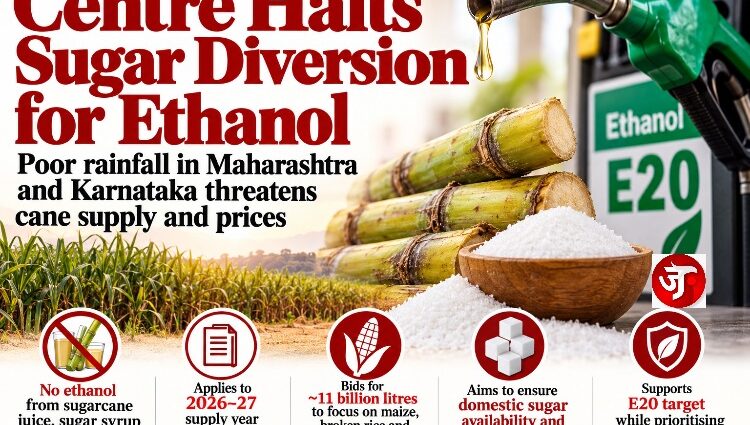
Centre Halts Sugar Diversion for Ethanol production from sugarcane juice, sugar syrup and B-heavy molasses for the 2026–27 ethanol supply year, beginning in November, as concerns mount over domestic sugar availability, rising prices and poor rainfall affecting sugarcane crops in Maharashtra and Karnataka.
The Centre’s decision marks a significant shift in India’s ethanol procurement strategy, placing the availability of sugar for domestic consumption ahead of diverting sugarcane-based raw materials for fuel production. With two of India’s major sugar-producing states facing rainfall-related concerns, the government is seeking to prevent a potential squeeze on sugar supplies and protect consumers from price pressures.
What Changes Now?
Under the new directive, oil marketing companies (OMCs) have been instructed not to procure ethanol produced from sugarcane juice, sugar syrup or B-heavy molasses for the 2026–27 supply year.
Instead, the government’s ethanol procurement exercise, involving bids for approximately 11 billion litres, will focus on alternative feedstocks, including maize, broken rice and C-heavy molasses.
The move is intended to reduce the competition between sugar production and ethanol manufacturing for the same agricultural resources. By limiting the diversion of sugarcane-derived materials into fuel, the Centre aims to safeguard domestic sugar stocks at a time when crop conditions have raised concerns about future availability.
The immediate concern is the impact of poor rainfall on sugarcane cultivation in Maharashtra and Karnataka, two crucial contributors to India’s sugar industry.
Sugarcane requires substantial water to sustain healthy growth, and inadequate rainfall can affect crop development and production prospects. Any significant reduction in cane availability can place pressure on sugar mills, influence output and complicate efforts to maintain stable domestic supplies.
Against this backdrop, the Centre’s decision to halt sugar diversion for ethanol reflects a balancing act between India’s energy ambitions and the need to ensure sufficient sugar for household consumption and other domestic uses.
The government is seeking to avoid a situation in which the demand for ethanol feedstock competes with the availability of sugar, potentially putting additional pressure on prices.
The question is can India achieve Its E20 target without sugarcane-based ethanol?
India’s ethanol-blending programme remains a major component of the country’s strategy to reduce dependence on imported crude oil and increase the use of domestically produced renewable fuels.
The E20 target involves blending 20% ethanol with petrol. Achieving this objective requires substantial ethanol supplies, making the availability of alternative feedstocks increasingly important.
By shifting procurement towards maize, broken rice and C-heavy molasses, the Centre hopes to maintain ethanol supplies while reducing the diversion of sugarcane-based materials.
However, the strategy also presents challenges. Greater reliance on maize and rice raises questions about feedstock availability, competing uses, procurement costs and the management of agricultural resources. The overall impact will depend on production levels, prices and the capacity of ethanol manufacturers to adapt to the revised procurement framework.
The Centre’s decision highlights a growing policy challenge: how to expand renewable fuel production without compromising food availability and affordability.
Ethanol blending can help India reduce its reliance on imported fossil fuels. Yet, when the same agricultural resources are required for both food and fuel, governments must weigh energy security against the needs of consumers and farmers.
The decision to halt sugar diversion for ethanol is an attempt to manage that tension. By prioritising domestic sugar availability and encouraging alternative feedstocks, the government is seeking to keep its fuel-blending programme on track without placing additional pressure on the sugar market.
The larger question is whether India can sustain its ethanol ambitions while protecting food supplies from the effects of unpredictable rainfall and agricultural pressures. As the 2026–27 supply year approaches, the success of the revised procurement strategy will depend on the availability and affordability of alternative feedstocks, as well as the actual performance of sugarcane crops.
For now, the Centre’s message is clear: ethanol expansion must be balanced against domestic food requirements, and sugar availability remains a priority when agricultural conditions threaten supplies.
JANPATH NEWS NETWORK (JNN)
Independent. Fearless. On the People’s Path.