








July 6, 2026: Special Report: In a high-stakes diplomatic tightrope walk, President Donald Trump is steering U.S. policy through the turbulent aftermath of the 2026 Iran conflict, touting landmark agreements while juggling tensions with longtime ally Israel and lingering regional instability.
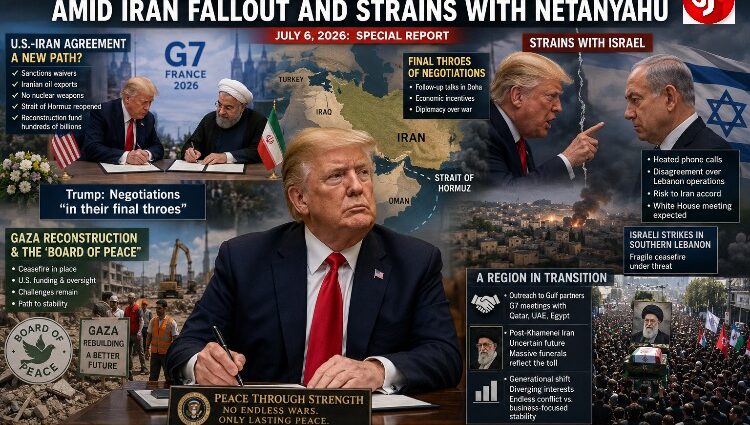
In the middle of the unrest, a landmark U.S.-Iran Agreement Takes Shape: At the G7 summit in France in mid-June, Trump personally signed a memorandum of understanding with Iran, marking a significant de-escalation following months of intense hostilities. The deal includes U.S. sanctions waivers to allow Iranian oil exports, commitments from Tehran to forgo nuclear weapons development, and steps to reopen the critical Strait of Hormuz. A major reconstruction fund, potentially worth hundreds of billions, is also on the table.
Trump has repeatedly described the broader regional negotiations as being in their “final throes,” expressing optimism for a comprehensive peace framework that could stabilize the area after the chaos of earlier strikes and retaliations. Follow-up talks, including reported discussions in Doha, underscore his administration’s focus on diplomacy backed by economic incentives.
Caught in all this, things have not eased up with Israel as tensions simmer with Israel: The path forward is not without friction. Trump’s relationship with Israeli Prime Minister Benjamin Netanyahu has shown visible strain. Reports of sharp phone calls, where Trump reportedly used strong language toward Netanyahu, highlight differences over continued Israeli operations in Lebanon and their potential to undermine the Iran accord. Despite this, discussions of a White House meeting persist, with both sides expected to address post-Khamenei Iran, Lebanon, Gaza, and long-term regional reshaping.
Recent Israeli strikes in southern Lebanon, which have claimed lives amid fragile ceasefires, add urgency to these talks. Trump continues to push for calm as he balances support for Israel with his goal of avoiding prolonged U.S. entanglements.
Reconstruction and the “Board of Peace”On the Palestinian front, Trump’s “Board of Peace” initiative, launched to oversee Gaza’s rebuilding after a ceasefire, remains active, with significant U.S. funding commitments. The effort faces ongoing challenges, including sporadic violence and implementation hurdles, but represents a cornerstone of the administration’s vision for post-conflict stability.
In the broader reginal picture, the death of Iran’s Supreme Leader Ali Khamenei in earlier strikes continues to ripple through the region, with massive funerals underscoring the human and political toll. Trump’s approach blends pressure, deal-making, and outreach to Gulf partners (including recent G7 meetings with Qatar, the UAE, and Egypt). A generational shift in U.S.-Israel dynamics is increasingly evident, with analysts noting diverging interests on issues like endless conflict versus business-focused stability.
As the dust settles from the Iran war, Trump’s Middle East strategy emphasizes quick wins through negotiation over open-ended commitments. Success hinges on fragile ceasefires holding and key players, from Tehran to Jerusalem, aligning with Washington’s timetable. The coming weeks, including any Trump-Netanyahu summit, could prove decisive in determining whether these glimmers of deals solidify into lasting peace or unravel under persistent regional pressures.