










Inflation has a remarkable talent for making every shopping trip feel like a negotiation with reality. The packet looks the same, the quantity shrinks, the bill grows, and somehow the household budget is expected to survive the exercise.
After years of relatively stable prices, India is once again grappling with rising inflation. But unlike classic inflation driven by excessive consumer spending, the current surge is largely cost-push inflation. The problem is not that Indians are buying too much, but that producing and transporting goods has become significantly more expensive.
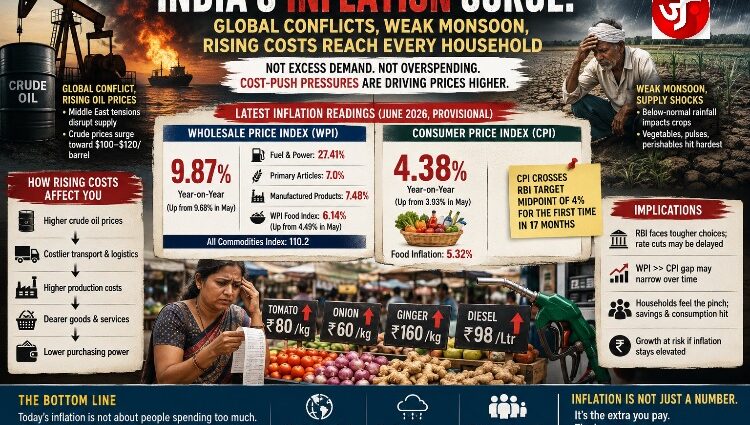
The latest figures underline the trend. Wholesale Price Index (WPI) inflation climbed to 9.87% in June 2026, while Consumer Price Index (CPI) inflation rose to 4.38%, crossing the Reserve Bank of India’s 4% target for the first time in nearly seventeen months. Businesses are facing soaring input costs today, and consumers are gradually feeling the impact.
The biggest driver has been the spike in global energy prices. The 2026 conflict in the Middle East disrupted oil supplies and pushed crude prices above $100 per barrel at various points. As one of the world’s largest oil importers, India has been particularly vulnerable. Fuel and power inflation reached 27.41%, increasing transportation, electricity, and manufacturing costs across sectors. Every product, from food to household goods, carries part of this additional burden.
Food prices have added another layer of pressure. A weak and uneven southwest monsoon, influenced by El Niño, disrupted agricultural production and reduced supplies of vegetables and other essential crops. Retail food inflation climbed to 5.32%, while the WPI Food Index rose to 6.14%, making everyday essentials more expensive for millions of families.
The gap between WPI and CPI also tells an important story. Wholesale prices are rising much faster because producers are absorbing much of the increased cost. However, history shows that prolonged wholesale inflation eventually reaches consumers through higher retail prices, smaller product sizes, or reduced product quality.
Rising inflation is contributing to higher unemployment by squeezing real incomes and corporate margins. High costs of living and input prices are forcing companies and factories to cut labour costs, slow hiring, or reduce workforce, thus pushing unemployment higher. This view is generally not highlighted, but is a driver for unemployment.
The months ahead will largely depend on two uncertainties: whether the monsoon improves agricultural output and whether global energy markets stabilise. Until then, inflation will remain one of India’s biggest economic challenges. For ordinary families, it is no longer just an economic statistic. It is the growing grocery bill, the rising fuel cost, and the daily struggle to make every rupee stretch a little further.
#Indi#Inflation
JoblessGrowth