










In the dusty town of Kishanpur in Uttar Pradesh’s Fatehpur district, a generation too young to vote but old enough to demand dignity made its voice heard.
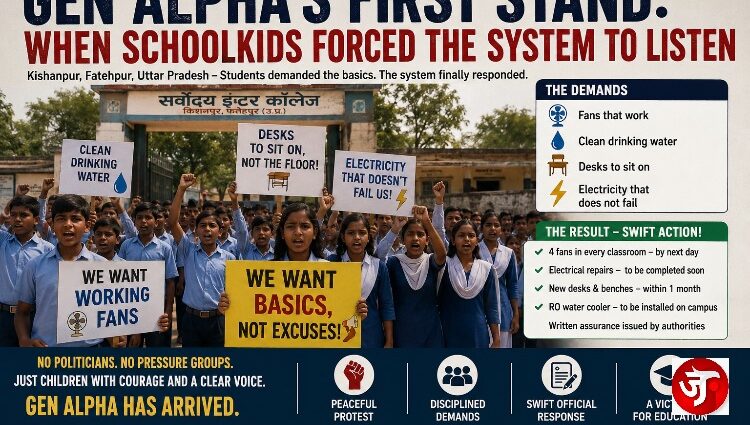
Students of Sarvodaya Inter College walked out of their classrooms, banners and placards in hand, and stood outside the school gates. Their demands were not revolutionary. They wanted fans that work, clean drinking water, desks to sit on, and electricity that does not fail them mid-lesson.
For months, these basic needs had been ignored. Classrooms sweltered without adequate fans. Wiring was faulty. Furniture was broken or missing. Clean water was a luxury.
The children of Generation Alpha, born into a world of smartphones and instant information, decided silence was no longer an option. What followed was swift and remarkable. Within hours of the peaceful protest, authorities responded. The District Inspector of Schools and local administration issued written assurances: four fans in every classroom by the next day, electrical repairs, new desks and benches within a month, and an RO water cooler on campus.
This was no minor concession. It was a rare moment when officialdom was forced to answer not to politicians or pressure groups, but to the very students the system claims to serve. The protest lasted only a few hours, yet it achieved what months of quiet complaints could not.
In a country where school infrastructure often remains an afterthought, these children reminded everyone of a simple truth: education begins with the basics. A child cannot learn in a hot, uncomfortable room without water or a place to sit. Their action was disciplined, focused, and effective.
Gen Alpha has announced its arrival. Not with slogans about distant ideologies, but with a clear demand for the minimum conditions of learning. If a group of school students can secure fans, desks, and clean water through peaceful protest, it raises a larger question for the education system across India: why did it take a demonstration for the obvious to be delivered?
This small victory in Fatehpur may be the first chapter of something bigger. When the youngest voices refuse to accept neglect, the system is forced to listen. And that is a powerful beginning.