








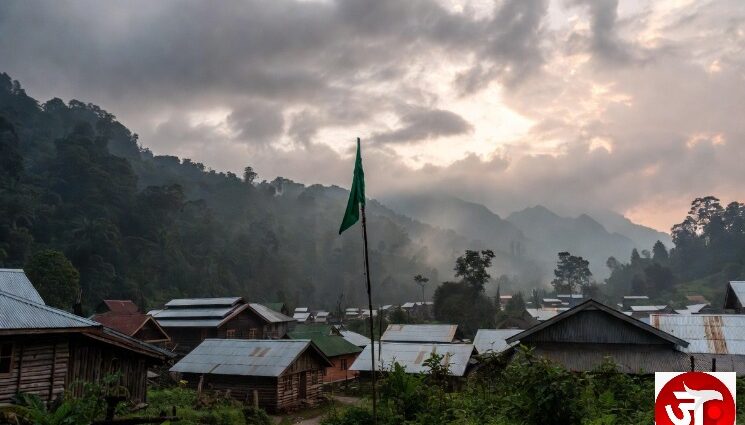
In the misty hills and fertile valleys of Manipur, the guns have never truly fallen silent. What began on 3 May 2023 as a brutal ethnic clash between the Meitei majority of the Imphal Valley and the Kuki-Zo communities of the surrounding hills has metastasized into a multi-front tragedy that continues to devour lives, trust, and hope more than three years later.
Lanbimei (or Lanbilung/Lanbi) Riamei, a 22-year-old from Longmai Bazar in Noney district was killed on 29 July 2026 by the CRPF’s elite CoBRA unit, adding layered anguish to the Manipuris, who saw this as unprovoked.
The counter-insurgency operation by the CRPF’s elite CoBRA unit in Bitiang village under Tupul subdivision launched a pre-dawn raid based on intelligence about an alleged Naga Village Guard (NVG) training camp.
An exchange of fire erupted. Riamei was hit and later succumbed. Two CoBRA personnel, Head Constable Radheshyam and Constable Jitendra Kumar, suffered minor injuries. Three other NVG members were also wounded. Security forces described the NVG as an armed local defence group operating illegally; some narratives linked the camp to recent attacks on Kuki communities amid the escalating Naga-Kuki tensions that have layered onto the original Meitei-Kuki conflict of 2023.
Naga organisations saw it differently. The United Naga Council and the Working Committee of the Joint Tribes Council condemned the operation as “unprovoked,” “vindictive,” and part of a pattern of militarised suppression of Naga areas. They announced indefinite shutdowns across Naga-inhabited zones, protested the targeting of village volunteers who, they argue, protect communities from external threats in a state where formal security has repeatedly failed ordinary people.
Mourners gathered, gun salutes were fired, and demands for justice and an end to heavy-handed combing operations grew louder. The contrast in language is telling: “village guard” to one side, “militant” to another, each reflecting the fractured realities of a conflict that has now drawn in Meiteis, Kukis, and Nagas.
Since May 2023, ethnic violence has killed hundreds and displaced nearly 60,000 people who were trapped in overcrowded relief camps or prefabricated shelters, while thousands of homes lie in ruins. Free movement between valley and hills is a distant memory; highways are scarred by blockades, ambushes, and fear.
Political upheaval followed the bloodshed. President’s Rule came and went. A new state government under Chief Minister Yumnam Khemchand Singh took office in February 2026. CoBRA battalions were rushed in to restore order. Yet free movement remains restricted, highways are periodically choked by blockades, and trust between communities and between the hills and Delhi remains shattered. Home Minister Amit Shah has reviewed the situation from afar; a high-profile visit by the top leadership has been conspicuously absent.
The new administration inherited not peace, but a fresh fault line: escalating violence between Kuki-Zo and Naga communities across the hill districts. Church leaders ambushed, civilians abducted, six Naga bodies recovered in June 2026, each atrocity deepening the wounds.
July and early August brought no respite. Village volunteers and security personnel fell in shoot-outs. Assam Rifles camps faced mob attacks.
A Bailey bridge was blown apart. Economic blockades choked supplies. Forty-six militants surrendered, yet drug networks and armed groups persist.
The Supreme Court has demanded special courts and faster justice for thousands of unresolved cases, while the state remains heavily militarised.
Union Minister of Parliamentary Affairs Kiren Rijiju has accused the Congress and other opposition parties of politicizing the ethnic crisis in Manipur. He maintains that lasting peace requires communities to give up weapons and engage in peaceful dialogue, while defending the central government’s long-term approach to handling the conflict
While ministers speak of reconciliation and “vested interests,” on the ground the trust deficit yawns wider. Daily life is hostage to tension, restricted roads, and intermittent bloodshed.
Manipur does not need more operations that produce body counts and shutdowns. It needs political courage, transparent investigations, and leaders willing to stand before the families of the dead – Naga, Kuki, and Meitei alike. Until then, the fires will keep burning, and posts like this one will continue to ask the hardest question of all: whose blood is cheap in India’s northeast?