






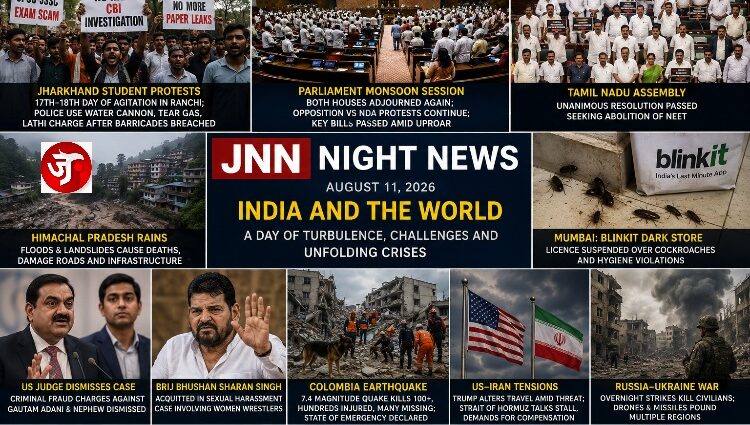
August 11: India ended another turbulent day with Parliament struggling under political confrontation, states battling weather emergencies and education remaining at the centre of a growing national debate. Beyond India’s borders, a devastating earthquake in Colombia, mounting tensions between the United States and Iran and continuing wars in Europe and the Middle East kept the global picture deeply unsettled.
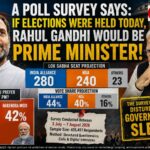
In India, the political temperature remained high as the Monsoon Session of Parliament faced repeated disruptions. Opposition parties continued to press the government over student protests and alleged examination irregularities, while the ruling NDA mounted its own demonstrations over the police action in Jharkhand. The continuing confrontation has raised concerns that important legislative business could be squeezed by the political deadlock. The government, meanwhile, has accused the Opposition of deliberately paralysing Parliament.
The Jharkhand student agitation remained an important flashpoint, with job aspirants protesting alleged irregularities in recruitment examinations and demanding stronger independent investigation. The confrontation in Ranchi has now moved beyond the immediate dispute over examinations, becoming part of a wider national argument about competitive exams, paper leaks, government recruitment and the enormous pressure placed on India’s young job seekers.
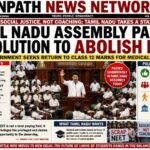
Education remained a major political issue elsewhere as well. The Tamil Nadu Assembly passed a resolution against NEET, with the demand reflecting the state’s long-standing opposition to the centralised medical entrance examination. The issue continues to expose the wider tension between national examination systems and states that argue for greater control over admissions and educational policy.
The monsoon remained another major concern. Heavy rain, floods and landslides continued to threaten parts of northern India, particularly Himachal Pradesh, where difficult terrain and saturated slopes have repeatedly turned intense rainfall into deadly landslides and road disruptions. The continuing weather emergency has once again highlighted India’s vulnerability to increasingly extreme monsoon conditions.
In another development involving India’s territorial and diplomatic interests, New Delhi continued to reject China’s attempts to rename places in Arunachal Pradesh, maintaining that such exercises cannot alter India’s sovereignty over the region. The dispute remains part of the broader and continuing strategic tension between the two Asian powers.
India’s legal and corporate landscape also produced significant developments. A US federal judge dismissed criminal fraud and bribery charges against industrialist Gautam Adani and his nephew, while the acquittal of former wrestling federation chief Brij Bhushan Sharan Singh in a sexual harassment case involving women wrestlers added another closely watched legal development to the national conversation.
Meanwhile, India’s fast-growing quick-commerce industry received an unexpected reminder that speed is not a substitute for hygiene. A Blinkit dark store in Mumbai reportedly faced licence suspension after inspectors found cockroaches and serious sanitation violations. For an industry built around delivering almost anything within minutes, the discovery suggested that some problems remain stubbornly resistant to technological disruption.
The biggest international story, however, came from Colombia, where a powerful 7.4-magnitude earthquake struck the western part of the country. The disaster caused widespread destruction and left more than a hundred people dead, with hundreds injured and many others feared trapped or missing as rescue operations continued. Cali, Pereira and surrounding areas were badly affected, while emergency teams deployed troops, rescue workers, dogs and drones in a desperate search for survivors.
The scale of the Colombian disaster continued to become clearer through the day. Reports put the death toll at more than 100, while other later estimates were considerably higher. Thousands were reported missing in some accounts, underscoring the uncertainty still surrounding the full human cost of the catastrophe. Hospitals, roads and other infrastructure were damaged, turning the earthquake into a major national emergency.
In the Middle East, the confrontation between Washington and Tehran remained dangerously unresolved. President Donald Trump has demanded compensation from Iran as negotiations over the Strait of Hormuz continue to falter. Tehran, meanwhile, has put forward its own conditions for reopening the strategic waterway. The dispute carries consequences far beyond the two countries because the Strait of Hormuz is one of the world’s most important energy corridors.
The geopolitical uncertainty was accompanied by extraordinary reports surrounding Trump’s security arrangements. Accounts said the US president altered his travel plans amid an alleged Iranian assassination threat, highlighting the increasingly tense security environment surrounding the confrontation.
The Russia-Ukraine war showed no sign of easing. Overnight strikes resulted in civilian deaths and injuries, while both sides continued to exchange drones and missiles. Ukraine is also pursuing deeper defence and food-security cooperation with Saudi Arabia, reflecting the increasingly global diplomatic dimensions of the conflict.
The Middle East saw another dramatic legal and political development as a Syrian court reportedly sentenced former President Bashar al-Assad and his brother to death in absentia over allegations involving war crimes and crimes against humanity. The ruling represents an extraordinary development in the long aftermath of Syria’s devastating civil war.
Europe, meanwhile, continued to confront the consequences of extreme weather. Severe drought has lowered water levels in several areas to the point where submerged Second World War-era vessels and other remnants of the past have begun emerging from rivers and reservoirs, offering a striking reminder of how climate extremes can expose history that had remained hidden for decades.
The United States also saw major controversy over childhood vaccination policy after President Donald Trump signed an executive order directing changes to the federal childhood immunisation recommendations. The order is part of a broader effort by his administration to reduce the number of vaccines recommended universally for American children and to give parents and doctors more flexibility over the timing and sequencing of vaccinations
Taken together, the day offered a striking snapshot of an unsettled world.
In India, young people continued demanding a fairer recruitment system, Parliament struggled to function, states confronted floods and landslides, and education policy once again became a political battlefield.
In Colombia, rescue teams dug through rubble searching for survivors.
In the Middle East, the Strait of Hormuz remained a dangerous pressure point between Washington and Tehran.
In Ukraine, missiles and drones continued to bring war into civilian life.
And across Europe, drought was exposing the physical remains of wars fought generations ago.
The stories were different, but the underlying theme was remarkably similar: institutions, governments and ordinary people were all being tested at once.
For India, the immediate questions remain jobs, examinations, Parliament, education, monsoon preparedness and political accountability.
For the world, the questions are even larger: Can diplomacy prevent another escalation in the Middle East? Can Ukraine and Russia find a path away from continued warfare? How many more lives will natural disasters claim as extreme weather intensifies? And how resilient are governments when several crises arrive at the same time?
August 11 closes with no shortage of answers still waiting to be found.
The night is quieter.
The crises are not.
JANPATH NEWS NETWORK (JNN)
Independent. Fearless. On the People’s Path.