









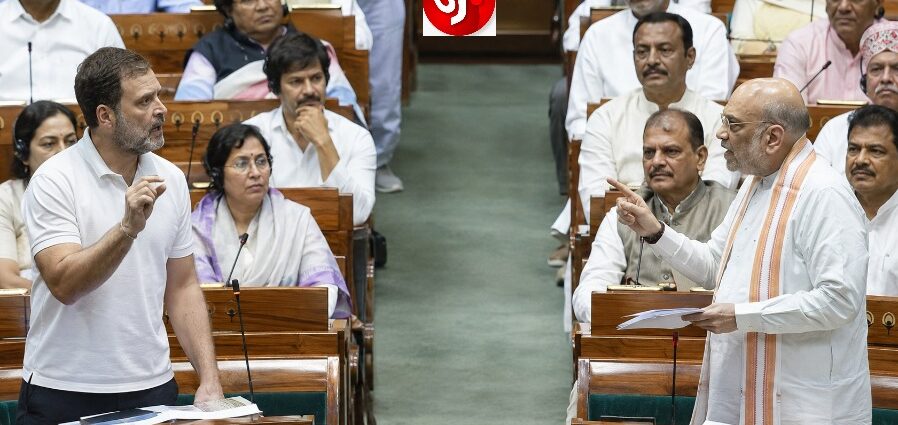
The political battle over the NEET-related student protests has moved from the streets into Parliament, with Home Minister Amit Shah challenging the Opposition to a detailed debate and Leader of Opposition Rahul Gandhi demanding something far more direct: specific answers and accountability.
On August 12, 2026, Amit Shah said the government had “nothing to hide” and was prepared for an extensive discussion on the student protests, alleged examination irregularities and the police response to demonstrators. Shah proposed beginning the debate at 3 PM and continuing until 3 PM the following day, saying he would remain in the House, take notes and personally answer the questions raised by the Opposition.
He urged the Opposition to submit a formal request to Lok Sabha Speaker Om Birla so the discussion could begin, while accusing the Opposition of deliberately disrupting Parliament and preventing meaningful debate.
But Rahul Gandhi rejected the framing. His response was essentially: the Opposition does not want another lecture. It wants answers.
Gandhi demanded clarity on the central questions surrounding the police action against protesting students. Who ordered the use of force? Who authorised the alleged firing or pellet use? Who was responsible for the use of lathis reportedly fitted with nails? Who is accountable for the injuries sustained by students?
For Gandhi, the issue is therefore not simply whether Parliament debates the protests. It is whether the government is prepared to identify those responsible for what happened and accept political accountability.
The confrontation exposes the fundamental disagreement between the two sides.
The government says: Give us a debate and we will answer everything.
The Opposition says: Answer the specific questions first.
And Parliament, meanwhile, remains caught in the familiar Indian political ritual in which everyone insists they desperately want discussion while spending considerable energy preventing the other side from having it. Democracy, apparently, requires both a microphone and an argument about who gets to use it.
Rahul Gandhi reiterated:
“We are not interested in him giving us a lecture or a discussion. We are interested in one simple thing – who shot those students? Who gave the order to shoot those students?”
“Who blinded one of the students? Who shot one of the students in the ear? Who gave the order to beat the students with lathis with nails? Who gave that order? That order was implemented by the Home Ministry… Did Mr. Amit Shah give this order to shoot our children? If he did, he should resign because he is culpable. And if he did not, he should resign because he is incompetent.”
Additional remarks in the exchange: He accused Shah of lacking courage, described the late offer as an attempt to “refill the gas” after the “balloon has burst,” and said the Home Minister has “no courage” to face the House properly.
The core offer: Debate starting -3 PM today running to 3 PM the next day, with Shah answering everything; and the rejection are consistent. This exchange occurred against the backdrop of weeks of protests and parliamentary disruptions over the NEET issue and police response.
The dispute comes after weeks of confrontation over the student agitation, NEET-related allegations and police action during demonstrations, including protests and marches near Parliament.
The crucial question now is whether Shah’s proposed 24-hour debate actually materialises, and if it does, whether it produces answers on responsibility and accountability rather than simply another round of competing speeches.
For students and their families watching from outside Parliament, the distinction matters.
They are not asking for a theatrical contest between government and Opposition.
They want to know who gave the orders, what happened on the ground, who was injured, and who will be held responsible. Basically, its a question of if the government has nothing to hide, why beat around the bush?
JANPATH NEWS NETWORK (JNN)
Independent. Fearless. On the People’s Path.