









Former BJP spokesperson questions India’s tax burden, public services and accountability as he calls the middle class a government “ATM”
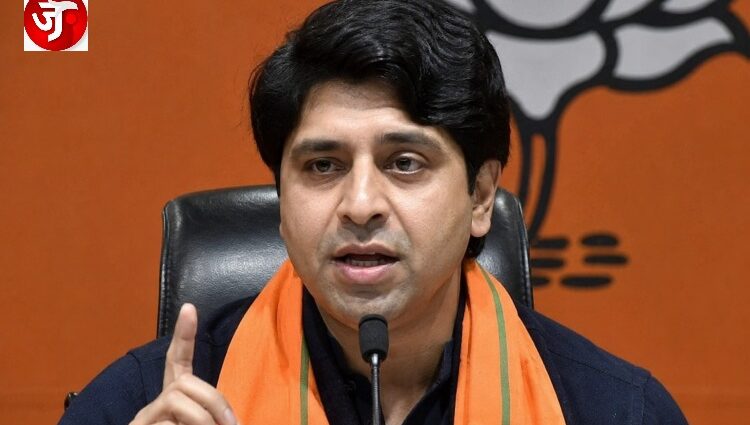
August 18th: In remarks that have acquired a sharper political significance following his resignation from the Bharatiya Janata Party, former BJP national spokesperson Shehzad Poonawalla has described India’s middle class as being “looted in broad daylight”, arguing that ordinary taxpayers are carrying an increasingly heavy financial burden without receiving public services of comparable quality in return.
Poonawalla made the remarks in a video shared on Instagram as part of his social-media initiative, The Manifesto. His comments came in the period surrounding his decision to leave active party politics, turning what might otherwise have been another discussion on taxation into a striking critique from a politician who had spent years publicly defending the BJP.
“The Indian middle class is being looted in broad daylight. It has become like an ATM,” Poonawalla said, arguing that salaried Indians pay income tax, indirect taxes and tolls while continuing to face poor roads, inadequate public schools, deteriorating infrastructure, corruption and weak accountability.
His central question was blunt: what exactly does the taxpayer receive in return?
Poonawalla pointed to a growing contradiction in the lives of India’s middle class. Families pay taxes to the state but increasingly depend on private providers for basic necessities, particularly education and healthcare.
“When you need to send your child to a school, it is invariably a private school. When you need to send your parents to a hospital, invariably, it is a private hospital,” he said.
He also listed paper leaks, corruption, toxic air, contaminated water and failing infrastructure among the problems confronting citizens despite the taxes and tolls they pay.
The remarks are particularly notable because they came from a former BJP national spokesperson who had for years been one of the party’s most visible voices on television and social media. Poonawalla joined the BJP after leaving the Congress in 2017 and became a prominent defender of Prime Minister Narendra Modi and the party.
His departure has unfolded in stages. Poonawalla submitted a resignation on July 30, according to reports, citing personal circumstances. His subsequent public statements and social-media activity fuelled speculation about his political future.
On August 17, however, Poonawalla again sought to resign from all party positions and primary membership after his earlier resignation had reportedly not been accepted. He cited pressing financial and personal circumstances and indicated that he intended to move towards the private sector.
That chronology gives his earlier comments about the middle class an added political resonance.
Poonawalla’s criticism was not framed as an attack on one particular government. He argued that the problem has persisted across governments since Independence. In his view, the issue is structural: the Indian middle class is expected to contribute substantially to public finances while frequently being forced to purchase privately what should, ideally, be reliable public services.
His argument also arrives against a backdrop of continuing debate over personal taxation. The Union Budget 2026-27 retained the existing new-regime income-tax structure rather than announcing another major restructuring of the slabs. Under the new regime, income up to ₹4 lakh remains tax-free, while the highest slab of 30 per cent applies above ₹24 lakh.
Poonawalla has called for precisely the kind of relief that many salaried taxpayers routinely demand: lower taxes, wider income-tax slabs and greater efficiency in the use of public money.
“Cut taxes for the middle class. The salaried class should not be paying such high taxes. They need to be given a break,” he said.
He also argued that tax slabs should be increased and insisted that every rupee collected through personal income tax must be used efficiently.
The larger issue raised by his intervention is one that extends beyond party politics: the social contract between the taxpayer and the state.
For India’s salaried middle class, taxation is largely unavoidable and increasingly visible. Income tax is deducted at source, consumption attracts indirect taxation, and citizens encounter additional charges through tolls, fees and user payments. At the same time, middle-class households frequently shoulder private expenditure on schooling, healthcare, housing and other essential services.
That creates a difficult question for any government: if citizens are paying into the public system but purchasing essential services privately, what should constitute a fair return on taxation?
Poonawalla’s intervention does not by itself establish that taxpayers receive inadequate value for every rupee paid. Nor does it prove that India’s public services have universally deteriorated. But his remarks expose a growing political fault line: the expectations of a tax-paying middle class that wants not merely economic growth statistics, but functioning schools, dependable healthcare, clean air, safe water, usable roads and accountability.
For a politician who built much of his public profile defending the government, the timing makes the remarks impossible to ignore.
The question now is whether Poonawalla’s critique represents merely a personal intervention accompanying his exit from active politics, or whether it reflects a broader dissatisfaction among India’s salaried middle class that political parties can no longer afford to treat as a secondary issue.
After all, the middle class may be many things in Indian politics: voter, consumer, taxpayer and electoral swing constituency.
Calling it an “ATM” turns that relationship into a much more uncomfortable question:
How long can citizens be expected to keep depositing money into the system without asking what they are getting back?
JANPATH NEWS NETWORK (JNN)
Independent. Fearless. On the People’s Path