





The message from these simultaneous crises is stark: geopolitics, energy, trade and security are becoming increasingly interconnected. A missile strike in one region can move oil prices thousands of kilometres away, while a tariff decision in Washington or Ottawa can reverberate through economies already under pressure. The world, inconveniently, has managed to make several crises happen at once.
Iran-Israel-US confrontation deepens as Houthi attacks hit Saudi Arabia; oil surges toward $100 a barrel
The Middle East is spiralling deeper into a dangerous new phase of war as Iran, Israel, the United States, Yemen’s Houthi forces and Saudi Arabia become increasingly entangled in a rapidly widening conflict.
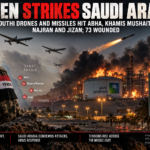
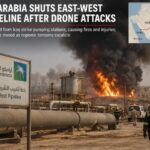
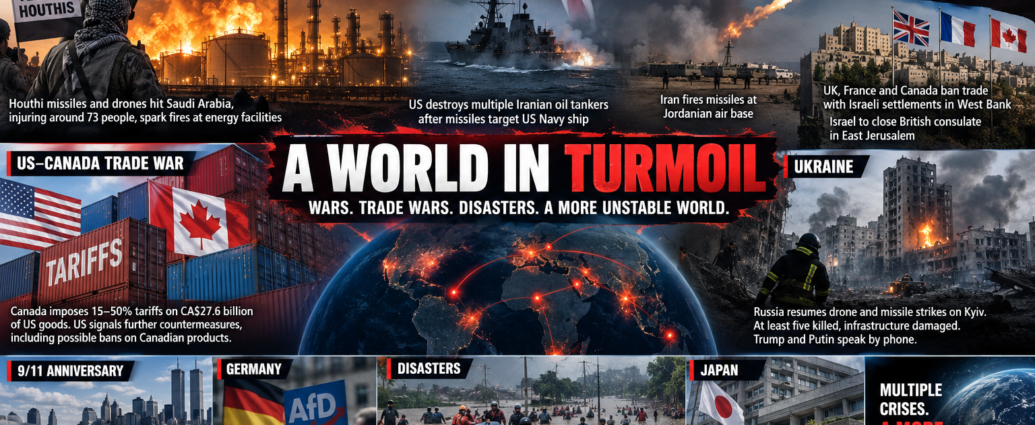
Houthi forces launched missiles and drones at multiple targets in Saudi Arabia, injuring around 73 people and triggering fires at energy facilities. The attacks have raised fresh fears over the security of critical oil infrastructure and the possibility that the conflict could spread across the Gulf.
The United States has also claimed that it destroyed multiple Iranian oil tankers after Iranian missiles targeted a US Navy vessel. Separately, Iran fired missiles toward a Jordanian air base, further expanding the geographic reach of the confrontation.
The consequences are already being felt far beyond the battlefield. Oil prices have climbed toward $100 a barrel, reflecting mounting fears that attacks on energy infrastructure, shipping routes and oil supplies could trigger a major global economic shock.
The latest escalation comes as Western governments take increasingly confrontational positions against Israel over its settlement policy. Britain, France and Canada have banned trade with Israeli settlements in the occupied West Bank, while Israel has responded by announcing the closure of the British consulate in East Jerusalem.
The diplomatic rupture adds another layer to an already explosive regional crisis.
Washington and Ottawa enter a new trade confrontation
The global economic picture is also deteriorating. Canada has imposed retaliatory tariffs ranging from 15% to 50% on approximately CA$27.6 billion worth of American goods, including steel, dairy products, appliances and electronics.
Washington has signalled that further countermeasures could follow, including possible restrictions on Canadian products. The dispute threatens to put additional pressure on businesses and consumers on both sides of the border.
Ukraine war erupts again
In Ukraine, Russia resumed major drone and missile attacks on Kyiv following a brief pause during a visit by US envoys Steve Witkoff and Jared Kushner.
At least five people were killed, while infrastructure was damaged across several districts. The renewed attacks came despite continuing diplomatic efforts, underscoring the enormous gap between negotiations and conditions on the battlefield.
US President Donald Trump and Russian President Vladimir Putin also spoke by phone, adding another significant diplomatic development to an increasingly volatile international landscape.
A world facing multiple crises at once
From the Middle East to Ukraine and from trade wars to devastating floods, the international system is facing simultaneous shocks.
In Germany, the far-right AfD recorded a landslide victory in Saxony-Anhalt, reportedly securing around 44% of the vote, signalling another major shift in European politics.
Meanwhile, disaster operations continue across Asia. More than 13,500 people have reportedly been rescued from floods in Nepal, while Bihar is battling severe flooding. Central Japan faces torrential rain and flood warnings, and a medical helicopter crash in Sarawak, Malaysia, killed five people.
In Japan, markets are watching the Bank of Japan, which is widely expected to raise its policy rate by 0.25 percentage points later this month.
JANPATH NEWS NETWORK (JNN)
Independent. Fearless. On the People’s Path.