








73 Reported Wounded as Energy Facilities Ignite in Southern Saudi Arabia; Riyadh Vows Retaliation
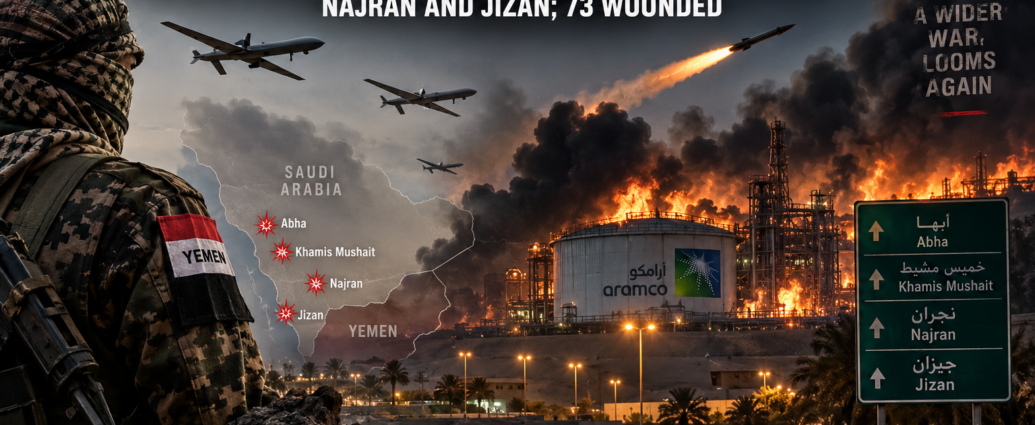
The long-simmering Yemen-Saudi conflict has erupted into a dangerous new phase, with Yemen’s Houthi forces launching a major wave of ballistic missiles and drones against targets deep inside southern Saudi Arabia, striking military and energy infrastructure and leaving at least 73 people wounded.
The attacks on Tuesday, September 8, struck or targeted areas including Abha, Khamis Mushait, Jizan and Najran, according to Saudi authorities and Houthi statements. Energy facilities were hit and fires broke out at several sites, while the Houthis said they had targeted Saudi Aramco installations and King Khalid Air Base.
Saudi officials said women and children were among those injured, describing the assault as a dangerous escalation and a direct threat to the kingdom’s sovereignty. Riyadh said it would take the necessary measures to confront the threat, effectively ending any suggestion that Saudi Arabia had remained silent.
The Houthi leadership presented the barrage as retaliation.
Its military spokesman, Yahya Saree, claimed that Saudi Arabia had carried out 121 airstrikes against Yemen during the preceding 72 hours, targeting areas including Marib, Al-Bayda, Al-Hudaydah, Taiz and Al-Jawf. The figure remains a Houthi allegation and has not been independently verified.
The latest confrontation is particularly significant because it threatens to pull Saudi Arabia back into a conflict it had sought to contain after years of devastating warfare.
The escalation is also unfolding against the backdrop of a much wider regional confrontation involving Iran, the United States and Israel. The Houthis have increasingly linked their military campaign to that broader struggle, while attacks around the Red Sea and the Bab el-Mandeb have already raised fears over global shipping and energy supplies.
Meanwhile, fighting is intensifying inside Yemen itself.
Yemeni government forces announced that they had recaptured the strategic Al-Yatmah area in Al-Jawf province from Houthi forces, opening another potentially important front in the country’s grinding civil war. Reports also said dozens of Houthi fighters had surrendered in the area, although the exact number and circumstances could not be independently established.
The significance of the latest attacks extends far beyond the Saudi-Yemeni border.
Southern Saudi Arabia contains critical energy infrastructure, while the wider region sits astride some of the world’s most important oil and shipping routes. Any sustained escalation could therefore reverberate through global energy markets, shipping costs and already fragile regional security.
What had once appeared to be a conflict moving toward containment is now threatening to become another major front in the Middle East’s widening war.
And the most troubling part is that the missiles are no longer merely symbols of escalation. They are landing on infrastructure, setting fires and injuring civilians.
The question now is whether Riyadh and the Houthis can prevent this latest exchange from becoming the beginning of another full-scale Saudi-Yemeni war.
JANPATH NEWS NETWORK (JNN)
Independent. Fearless. On the People’s Path.