







Israel on the brink: Election showdown, Iran war fears and Gaza’s fragile ceasefire
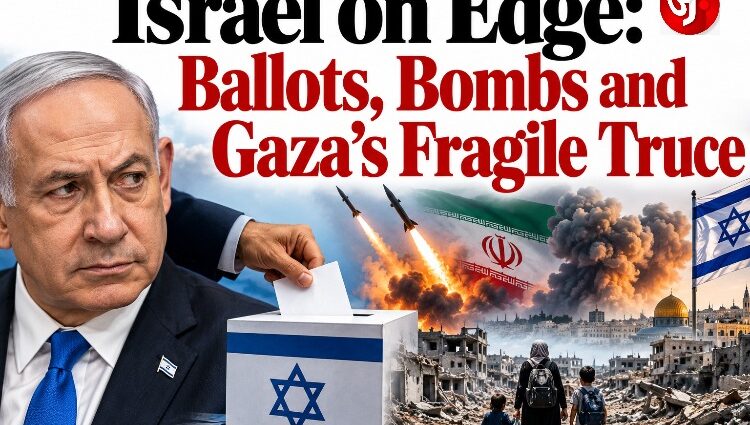
Israel heads towards a decisive political moment, with the October 27 Knesset election unfolding against a backdrop of military tensions with Iran, a precarious Gaza ceasefire and escalating friction in the occupied West Bank. Prime Minister Benjamin Netanyahu of Israel faces a high-stakes political battle as opposition forces seek to break his hold on power, while the prospect of renewed regional conflict casts a long shadow over the campaign.
The central question is no longer simply who will govern Israel, but whether the next government can deliver political stability and security without dragging the region into another devastating war.
The election: Netanyahu faces a battle for political survival
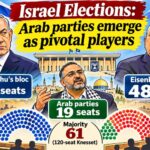
The latest polling averages in Israel underline the uncertainty. A poll tracker updated through October 20 puts Netanyahu’s governing bloc at approximately 52 seats, the anti-Netanyahu Zionist opposition at around 50, and Arab parties at roughly 14 in the 120-member Knesset. A government needs 61 seats, leaving neither side with a clear path to power.
In Israel, Netanyahu’s Likud remains a major force, but the numbers suggest that retaining the premiership could depend on coalition negotiations and smaller parties. A fragmented result could produce prolonged bargaining or another period of political uncertainty.
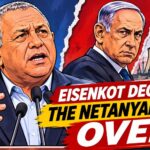
Gadi Eisenkot: a central opposition challenger
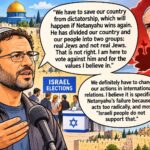
Eisenkot’s Yashar party in Israel has emerged as a leading opposition force in several polls. Yet a strong showing for one party does not automatically translate into a governing majority, particularly when opposition parties differ on policy and coalition arrangements.
The Arab parties could become pivotal in determining the balance of power. Their combined projected strength may give them substantial leverage in coalition negotiations, although their participation in, or support for, a government would depend on the political arrangements that emerge after voting.
The election is also being shaped by questions of military service, the influence of ultra-Orthodox parties and public confidence in Netanyahu’s security leadership in Israel. With the vote only days away, the central uncertainty is whether voters will deliver a decisive verdict or leave Israel facing another difficult coalition-building exercise.
Iran: the threat of a renewed war
The most consequential development is not confined to Israel’s campaign trail. On October 22, The Times of Israel, reporting on a New York Times investigation, said the United States and Israel had drawn up options for renewed strikes on Iran after the US midterm elections on November 3. Possible targets reportedly include nuclear facilities, missile and drone arsenals, and energy infrastructure.
The reporting describes contingency planning, not a confirmed decision to launch another attack. US President Donald Trump has repeatedly delayed possible military action, and the final decision remains uncertain. Nevertheless, intensified military exercises and preparations have added to fears that the conflict could resume.
The stakes extend far beyond Iran and Israel. A renewed campaign could trigger Iranian retaliation against Israeli territory, US installations and regional infrastructure. With the Strait of Hormuz central to global energy supplies, further escalation could also disrupt shipping and push oil prices higher.
The diplomatic challenge is formidable: Washington wants concessions over Iran’s nuclear programme, while Tehran has resisted key US demands. Military pressure may be intended to strengthen Washington’s negotiating position, but it also risks closing the space for diplomacy.
Gaza: a ceasefire that has not ended the killing
A year after the Israel and Palestine ceasefire agreement, the humanitarian picture remains devastating. On October 9, Amnesty International and more than 100 humanitarian, human rights and civil society organisations warned that the ceasefire existed “in name only,” citing continued Israeli attacks, restrictions on aid and rebuilding materials, and the destruction of civilian infrastructure.
The organisations reported that more than 1,400 Palestinians had been killed by Israel since the ceasefire began, while nearly two million people still needed shelter and 1.4 million faced crisis-level hunger. These are reported figures from the organisations’ October 9 statement, not a fresh casualty count for October 22.
Israel maintains that its strikes target Hamas operatives and respond to security threats and ceasefire violations. Hamas’s future disarmament, the arrangements for an international stabilisation force, Israeli withdrawal and Gaza’s reconstruction remain major obstacles to a lasting settlement.
The central contradiction is stark: a ceasefire can reduce the intensity of a war without delivering safety, adequate food, functioning hospitals or a credible path to recovery. For Gaza’s civilians, the difference between a formal truce and peace remains painfully clear.
West Bank: olive harvest becomes another flashpoint
The occupied West Bank has seen renewed friction during the annual olive harvest, with Palestinian farmers and volunteers reporting settler attacks, theft and restrictions on access to farmland.
On October 21, US congressional candidate Brad Lander was among dozens of volunteers detained by Israeli forces while assisting Palestinian farmers near Nahalin, close to Bethlehem. Lander was subsequently released. The Israeli military said access to the area required prior coordination with the authorities; Lander and other activists argued that such restrictions undermined Palestinians’ ability to cultivate their land.
The incident brings the broader conflict over land, settlements and Palestinian movement into sharper focus just days before Israel votes. It also demonstrates how the occupation remains a source of tension beyond Gaza, even as attention shifts towards the election and the possibility of renewed confrontation with Iran.
What to watch before October 27
- Israel: The final polls: Can Netanyahu’s bloc reach the 61-seat threshold, or will opposition and Arab parties determine the next government?
- Washington’s Iran strategy: Will Trump continue to delay military action, or will contingency planning turn into a new offensive after November 3?
- Gaza’s ceasefire: Will aid access improve and reconstruction begin, or will continued attacks undermine the truce further?
- The West Bank: Will settler violence and restrictions on Palestinian farmers intensify during the olive harvest?
The bigger picture
Israel is approaching an election in which domestic politics and regional security are inseparable. Netanyahu’s future may depend on voters’ assessment of his leadership, but the consequences of the election will extend well beyond the ballot box.
A renewed war with Iran could reshape the Israel ‘s security and energy landscape. Gaza’s unresolved humanitarian catastrophe threatens to undermine any claim that a ceasefire has delivered peace. Meanwhile, continuing tensions in the West Bank highlight the unresolved questions of occupation, land and Palestinian rights.
Israel’s next government will inherit not one crisis, but several interconnected ones. The election may decide who holds power in Israel’s Jerusalem; it will not, by itself, resolve the conflicts surrounding Israel.
JANPATH NEWS NETWORK (JNN)
Independent. Fearless. On the People’s Path.