





BRICS 2026: The Alliance Is Changing, and the World Order Is Changing With It
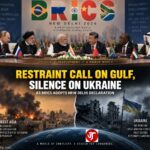
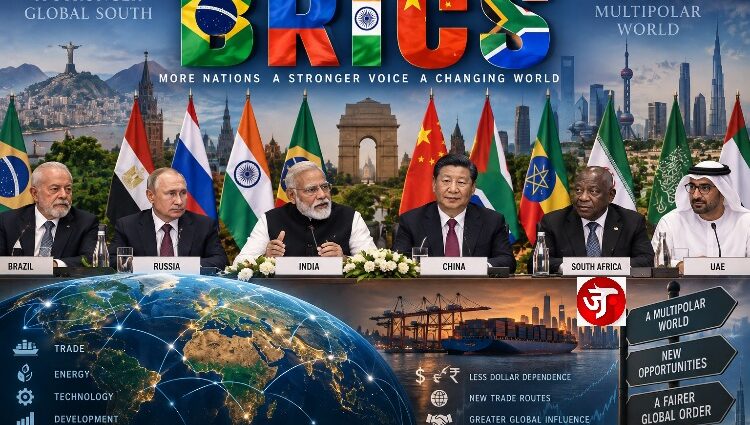
September 12: The BRICS grouping is entering a decisive phase as leaders gather in New Delhi for the 18th BRICS Summit on September 12–13, with India seeking to turn an increasingly diverse coalition of emerging powers into a more influential force in global politics, finance and trade.
What began as Brazil, Russia, India and China has become a much larger platform spanning Asia, Africa, the Middle East and Latin America. Brazil, China, Egypt, Ethiopia, India, Indonesia, Iran, Russia, South Africa and the UAE are officially listed by India as the 11 members, with a separate partner-country structure expanding BRICS’ reach further. There is, however, an important wrinkle worthy of a headline in its own right: Saudi Arabia’s membership status remains disputed, with Indian material listing it as a member while Reuters reports that Riyadh has not formally joined.
Collectively, the bloc now represents roughly half the world’s population, about 40% of global GDP and 26% of global trade, according to India’s government. Those numbers give BRICS considerable economic weight even if its members do not always agree with one another.
The real change: BRICS is no longer just an economic club
The old BRICS was relatively easy to understand: four major emerging economies seeking greater influence in institutions dominated by the United States and Europe.
The expanded BRICS is something much more complicated.
It brings together China and India, Russia and Brazil, Iran and the UAE, Egypt, Ethiopia, Indonesia and South Africa, along with a growing circle of partner countries. Their interests overlap on some economic questions but diverge sharply on security, foreign policy and relations with Washington.
That contradiction is now being tested in real time.
The Iran-UAE divide, intensified by the current Middle East conflict, is one of the clearest examples. Reuters reports that the conflict has made consensus inside BRICS much harder, while the UAE has suspended trade and financial transactions with Iran.
In other words, BRICS is becoming powerful enough to matter precisely while becoming too diverse to behave like a conventional alliance.
The dollar is the big battlefield
One of the most consequential developments is the effort to make international trade less dependent on the US dollar.
But the reality is more complicated than headlines about a coming “BRICS currency.”
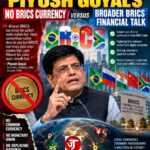
There is no BRICS common currency at present, and Brazil’s foreign minister has explicitly rejected the idea that the bloc is formally pursuing one. Instead, BRICS countries are concentrating on cheaper cross-border payment systems and greater use of national currencies for bilateral trade.
That may actually be more important in the long run.
India, China, Russia, Brazil and others do not need to create a single BRICS currency to gradually reduce dollar dependence. If businesses can increasingly settle transactions in rupees, yuan, roubles, dirhams and other currencies, the dollar’s monopoly over certain categories of international commerce could slowly weaken.
BRICS finance ministers and central-bank chiefs are discussing interoperability between payment systems and central-bank digital currencies. India has also been pushing the linking of fast-payment systems and local-currency settlement.
The dollar, meanwhile, remains overwhelmingly dominant in global payments and foreign exchange. So reports of its imminent funeral are somewhat premature. Humanity has not yet managed to replace the thing it complains about every Tuesday.
Why India matters enormously
India’s role is becoming particularly important because New Delhi does not appear interested in turning BRICS into an explicitly anti-American or anti-Western military-political alliance.
India wants BRICS to give the Global South more influence while preserving strategic autonomy.
That puts New Delhi in a distinctive position between competing power centres:
India needs Russia for defence and energy, China for trade and regional stability, the Gulf for energy and investment, the US and Europe for technology and markets, and the wider Global South for diplomatic influence.
India therefore has an incentive to make BRICS more effective without allowing China to completely dominate it.
The 2026 Indian presidency is built around “Building for Resilience, Innovation, Cooperation and Sustainability”, with the agenda covering economic cooperation, financial systems, technology, development, sustainability and reform of global institutions.
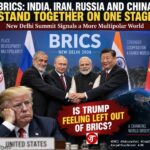
The presence of Xi Jinping and Vladimir Putin in New Delhi, alongside other leaders, also gives India an unusual diplomatic opportunity to position itself as a bridge between competing powers.
The New BRICS could reshape global institutions
This may ultimately be more important than the currency debate.
BRICS countries have long argued that institutions such as the UN Security Council, IMF and World Bank do not adequately reflect the economic and demographic weight of today’s developing world.
The bloc’s own New Development Bank is already an institutional alternative, having financed infrastructure and sustainability projects across member countries. Reuters puts its financing at about $43 billion.
If BRICS continues building its own financial institutions, payment networks and development mechanisms, the world could gradually move toward a system where countries have multiple institutional choices rather than a single Western-centred financial architecture.
That is a profound change even without BRICS becoming a formal alternative to the West.
But BRICS has a serious weakness
Its greatest strength is also its greatest weakness: diversity.
China and India compete strategically.
Iran and the UAE have sharply conflicting interests.
Russia is confronting the West.
Brazil and India generally favour strategic autonomy rather than an anti-Western confrontation.
Some members want de-dollarisation to protect themselves from sanctions; others simply want cheaper and more efficient trade.
Analysts therefore warn that BRICS could become too large and politically divided to act decisively. Reuters notes that disagreements have already complicated efforts to produce unified positions.
So BRICS is unlikely to become a NATO-style alliance.
It is becoming something potentially more interesting: a loose power network capable of changing the rules without necessarily agreeing on everything.
What BRICS means for the world
1. A more multipolar world
The US and Europe will remain enormously powerful, but emerging economies will have greater collective leverage.
2. Gradual pressure on dollar dominance
Not the collapse of the dollar, but potentially more trade conducted in local currencies and more alternatives to Western-controlled payment channels.
3. More bargaining power for the Global South
Countries outside the traditional Western alliance system will have greater choices when seeking financing, investment and diplomatic partnerships.
4. New competition for energy and commodities
BRICS contains major oil, gas, food, mineral and manufacturing powers. Its coordination could influence commodity trade and supply chains.
5. A different global financial architecture
The expansion of the New Development Bank and cross-border payment initiatives could eventually give developing countries alternatives to traditional Western institutions.
6. Greater pressure on Washington and Brussels
The West may increasingly have to negotiate with a collection of emerging powers rather than assuming that its economic and diplomatic preferences will automatically prevail.
7. More opportunities, but also more instability
A multipolar world gives countries more freedom, but competing power centres can also make crises harder to manage. The current tensions involving Iran, the Gulf, Russia, China and the West demonstrate the problem.
The bigger story
The most important development is not that BRICS is “replacing the West.” It isn’t.
The more significant transformation is that the world is moving from a system in which one dominant economic and financial centre could exert enormous influence toward a system with several competing centres of power.
That means the coming decade may be less about BRICS versus the West and more about countries such as India, Brazil, Indonesia, Saudi Arabia and the UAE deciding when to cooperate with Washington, when to cooperate with Beijing and Moscow, and when to cooperate with both.
The old question was:
Who runs the world?
The emerging question is more complicated:
Who gets to decide the rules?
And that is precisely why the New Delhi BRICS summit matters.
JANPATH NEWS NETWORK (JNN)
Independent. Fearless. On the People’s Path.