



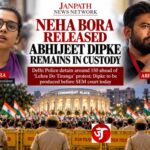


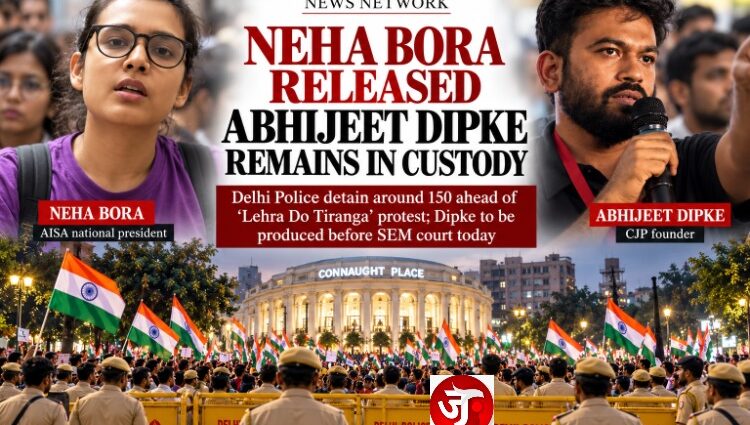
Neha Bora released from preventive detention early Saturday morning, on October 17, 2026 (around 9:21 AM IST), while Abhijeet Dipke (Cockroach Janta Party/CJP founder) remains in custody and is expected to be produced before a Special Executive Magistrate (SEM) court later today.
Background of the detentions
On Friday, October 16, Delhi Police preventively detained both leaders (along with roughly 150 others) amid heavy security ahead of the CJP’s “Lehra Do Tiranga” (Wave the Tricolour) protest. The call was for people to gather at Central Park in Connaught Place around 5 pm, wave the national flag, and protest the recent arrests of CJP co-conveners Saurav Das and Ashutosh Ranka, as well as broader demands for the resignation/impeachment of Chief Election Commissioner Gyanesh Kumar and a halt to the Special Intensive Revision (SIR) of electoral rolls (alleged irregularities and large-scale voter deletions).
Dipke was detained while leaving his residence in Jhandewalan en route to the venue, while Bora (along with AISA and other activists) was detained near Mandi House Metro Station. Notably, at around 10 pm, a message was sent out from her X handle with these words, “Where is Neha? Why have they been rushed away in a car with blackened windows without being allowed to meet their lawyers? End the illegal abduction of Neha! Release Neha now!” A video was released showing the car she was taken in.
Police had served Dipke notices earlier that day directing him not to proceed to Central Park. Prohibitory orders were in place (including under BNSS Section 163), the New Delhi Municipal Council had closed the park, and no permission had been granted for the gathering. Security was extensive across central Delhi. Dipke had previously been detained on October 10 (with Das and Ranka) at the airport ahead of an earlier protest; they were produced before an SEM court the next day and released after furnishing a ₹50,000 surety bond to maintain peace and good behaviour for one year.
Neha Bora’s detention and release
Bora’s lawyers and AISA alleged that after her detention she was moved between undisclosed locations for hours (including reportedly to an Anti-Narcotics Task Force facility at Palam), kept for about five hours as the sole female detainee in a detention van on the road, and that lawyers were denied access for several hours. She was eventually traced to RK Puram police station around midnight. There were also claims that medication was not provided despite her having been unwell. Police provided limited clarity on grounds or release timing at the time.
She was released early Saturday morning after formalities under Section 65 of the Delhi Police Act. After release, Bora told media (including ANI) that “law and order are being flouted in every possible way,” that ordinary citizens were being treated like hardened criminals, that detainees were often held overnight and released only the next morning/evening, and that prescribed procedures (including for women) and timely access to lawyers had not been followed. She said her lawyers spent 5–6 hours trying to reach her. She called for the release of all other detained protesters (including Dipke) and reiterated demands for action against CEC Gyanesh Kumar and suspension of the SIR process.
Abhijeet Dipke’s status
DDipke was expected to be produced before a Special Executive Magistrate on October 17. His appearance was expected to determine the next steps in the case, including whether he would be released subject to conditions or required to furnish security for maintaining peace.
His precise legal status and the outcome of the scheduled proceedings had not been confirmed in the early-morning accounts available for this report.
There is a previous detention and a ₹50,000 surety bond.
Dipke’s latest detention follows an earlier episode on October 10, when he was detained at the airport along with CJP co-conveners Saurav Das and Ashutosh Ranka ahead of another planned protest.
The three were produced before an SEM the following day and released after furnishing a reported ₹50,000 surety bond, with conditions relating to peace and good behaviour for one year.
The existence of that earlier bond is significant to the latest proceedings because the police have referred to concerns about a possible breach of peace and the earlier undertaking.
However, the precise legal basis for any further restrictions or action must be assessed against the applicable provisions and the magistrate’s orders. A previous preventive proceeding does not, by itself, establish that a person has committed a criminal offence.
The October 17 proceedings are separate from the October 10 appearance, even though the earlier bond forms part of the reported background.
Why was the ‘Lehra Do Tiranga’ protest called?
The planned October 16 gathering was presented by CJP as a peaceful, flag-waving demonstration. Organisers called on citizens to assemble at Central Park in Connaught Place at approximately 5 pm, wave the national flag and protest what they described as the suppression of dissent.
The immediate trigger was the detention of CJP co-conveners Saurav Das and Ashutosh Ranka. The broader demands centred on three issues:
- Accountability of the Election Commission: Protesters have demanded the resignation or impeachment of Chief Election Commissioner Gyanesh Kumar.
- Suspension of SIR: Activists and opposition voices have raised concerns about the Special Intensive Revision of electoral rolls, alleging irregularities and large-scale voter deletions.
- Release of detained activists: CJP and its supporters have protested the repeated detention of organisers and participants ahead of demonstrations.
The SIR exercise has become a wider political flashpoint, with critics questioning whether eligible voters risk being excluded from electoral rolls. The allegations require examination through electoral records, official explanations and the relevant legal processes; claims of irregularities should not be confused with findings already established by a competent authority.
CJP said the October 16 mobilisation had succeeded in drawing citizens despite the police action, pointing to people who gathered and waved the Tricolour.
Heavy security and prohibitory orders in central Delhi
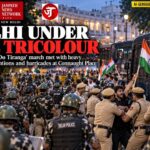
Delhi Police deployed extensive security ahead of the planned gathering. Prohibitory orders were in force, including restrictions under Section 163 of the BNSS, while the New Delhi Municipal Council had closed Central Park. The gathering had not received official permission.
Police maintained that preventive measures were necessary to preserve public order and ensure the smooth movement of traffic.
The authorities’ position must be considered alongside the concerns raised by the organisers. The central question is not simply whether the administration can impose restrictions on an unauthorised gathering, but whether those restrictions and any resulting detentions are applied lawfully, proportionately and with appropriate procedural safeguards.
Preventive powers exist to address specified risks before violence or another cognizable offence occurs. They are not a substitute for the legal requirements governing detention, access to counsel and review by the appropriate authority.
The dispute over SIR, the demands for accountability from the Election Commission and the repeated detention of protest organisers continue to shape the political atmosphere in Delhi.
Bora’s release has resolved one immediate question. Dipke’s custody, the handling of the detentions and the broader electoral controversy remain unresolved.
Janpath News Network will continue to follow developments in the case and the magistrate’s decision.
JANPATH NEWS NETWORK (JNN)
Independent. Fearless. On the People’s Path.