










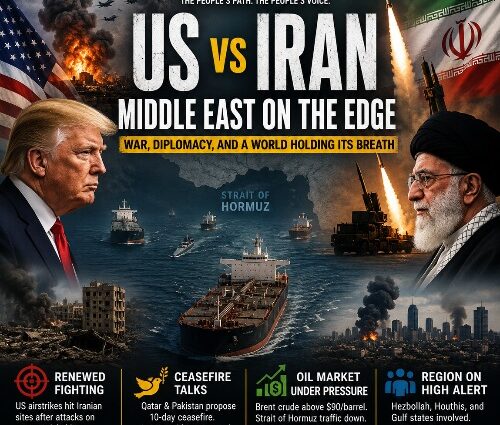
In the Middle East, the situation remains highly unstable, with military escalation continuing alongside renewed diplomatic efforts. Because this is an active conflict, every apparent breakthrough comes with the shelf life of milk left in the desert.
Military operations continue
The United States has continued airstrikes against Iranian military targets after renewed attacks on commercial shipping and U.S. personnel.
Iran has retaliated through missile and drone strikes against U.S.-aligned targets in the Gulf region while continuing to pressure maritime traffic around the Strait of Hormuz.
The Strait remains the central flashpoint, with shipping traffic significantly reduced amid security concerns.
Diplomatic window reopens
- Mediators, including Qatar and Pakistan, have reportedly presented Iran with a proposal for a 10-day ceasefire.
- The objective is to revive the interim memorandum reached in June, halt current hostilities, and create space for renewed negotiations over Iran’s nuclear program and regional security.
- A senior Iranian official has confirmed the proposal is under consideration, though no agreement has yet been announced.
Economic impact
- Oil markets remain extremely sensitive.
- Brent crude briefly climbed above $90 per barrel before easing as ceasefire reports emerged.
- Shipping through the Strait of Hormuz remains well below normal levels, keeping energy markets on edge.
Iran’s domestic economy
- Renewed fighting has intensified economic pressure inside Iran.
- The Iranian rial has weakened sharply, inflation remains severe, and disruptions to industry and trade continue to worsen living conditions.
Where things stand
At present, neither side appears ready for a decisive military settlement.
Washington continues to combine military pressure with openness to negotiations if Iran curbs attacks and addresses nuclear concerns.
Tehran has not rejected diplomacy outright but insists on security guarantees and relief from pressure before accepting broader agreements.
Regional mediators are working to prevent the conflict from expanding into a wider Middle East war.
The next several days are likely to be critical.
Two broad scenarios remain possible:
- De-escalation: Iran accepts the proposed 10-day ceasefire, allowing negotiations to resume and reducing pressure on global energy markets.
- Escalation: Any major attack on shipping, Gulf states, or U.S. forces could trigger another round of large-scale military strikes, increasing the risk of a broader regional conflict.
The conflict is balanced in an uneasy space between war and diplomacy. Unfortunately, history has shown that both can occur on the same day, sometimes within the same afternoon. Humans have an astonishing talent for scheduling peace talks between airstrikes.