







There are moments when a nation speaks without speeches. This week, the language has been the Tiranga.
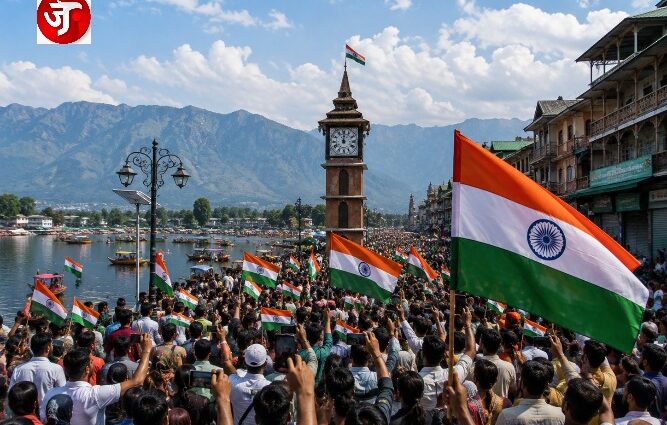
Across India, the Har Ghar Tiranga campaign has brought people into the streets ahead of Independence Day. But the enthusiasm visible in Kashmir and Nuh, Haryana, ahead of Independence Day, carries a particularly striking resonance. Recent Tiranga Yatras in Srinagar have seen CRPF personnel, schoolchildren and citizens marching together, while a major rally led by Lieutenant Governor Manoj Sinha moved through Srinagar, bringing the Tricolour into the heart of the city.
Lieutenant Governor Manoj Sinha moved through Srinagar, bringing the Tricolour into the heart of the city.
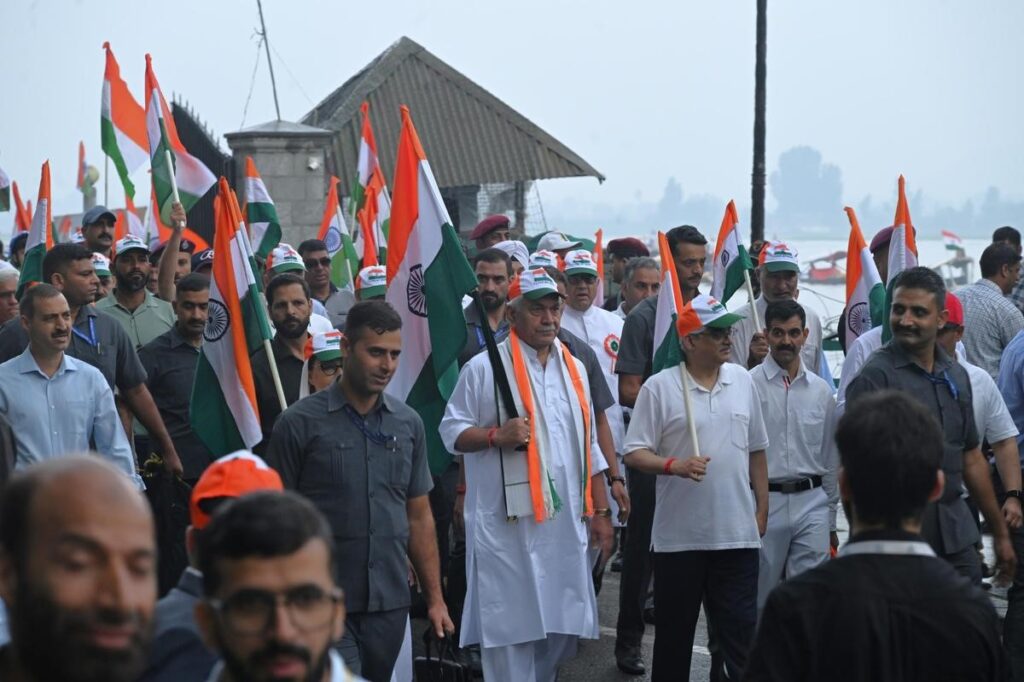
In Kashmir, the imagery is especially powerful. The Tiranga has travelled through the breathtaking landscape of Dal Lake, while Srinagar’s Lal Chowk has again become a place where the national flag is being celebrated publicly and proudly.
A Tiranga Rally was Organized in Ramban District Jammu Kashmir for Independence Day. A large number of students participated, and the procession reached the DC’s office.
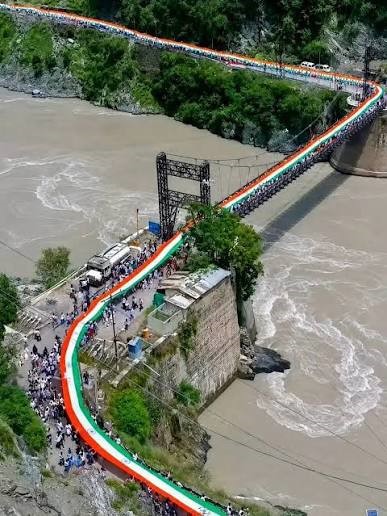
And in Nuh, Haryana, the response has been equally energetic, with Tiranga Yatras adding colour and enthusiasm to the Independence Day celebrations. Across Haryana, such marches have become part of a wider campaign encouraging citizens to carry the flag and bring it into their homes and communities.
Perhaps there is something deeper here than a government campaign or an Independence Day ritual.
Nearly seven centuries ago, Amir Khusro celebrated the extraordinary richness of Hindustan, praising its fertile lands, diverse cultures, languages, traditions and the spirit of its people. His words reflected an affection for a land where many traditions could flourish together, a sentiment that has travelled across centuries and continues to find expression in the idea of India today.
Seven centuries later, Muhammad Iqbal’s Tarana-e-Hindi gave generations of Indians an equally enduring expression of love for the country. Written in 1904, the poem celebrated India not through political power or conquest, but through the shared belonging of its people. Its opening words, “Sare jahan se achha Hindustan hamara”, became one of the most beloved patriotic verses in the country, carrying a simple yet powerful message: India’s greatness lies not only in its land, but in the people, cultures, memories and traditions that call it home.
Today, the Tricolour is telling its own rich story. with the saffron representing courage, sacrifice and selflessness, white symbolizing peace, truth and purity, and green signaling prosperity, growth and the land’s fertility with the Ashoka Chakra – the wheel of dharma, symbolising righteousness, movement and progress.
From the calms waters of Dal Lake to the busy streets of Lal Chowk, from Kashmir to Nuh, people are carrying a piece of India in their hands. For many, it is pride. For others, memories, for some, great sacrifice and pain, for others, a sense of belonging, hope or simply love for the land they call home.
Today, the Tiranga flying high, and willingly tells a different story. A flag left flying after the ceremony may seem like a small gesture, but collectively such gestures can reveal how a place is changing. In Kashmir, where history, identity and politics have often been deeply contested, the sight of the Tiranga remaining aloft beyond the official celebration carries a quiet significance: a symbol once surrounded by fear is increasingly becoming part of the everyday landscape.
Perhaps that is what patriotism looks like at its most beautiful: not merely a flag fluttering in the wind above us, but ordinary people choosing to carry it together, and the most powerful change is not that the flag is being raised, but that people are choosing to leave it flying.
Sare jahan se achha, Hindustan hamara. From Kashmir to Nuh, the Tiranga Finds Its Wings
JANPATH NEWS NETWORK (JNN)
Independent. Fearless. On the People’s Path.