










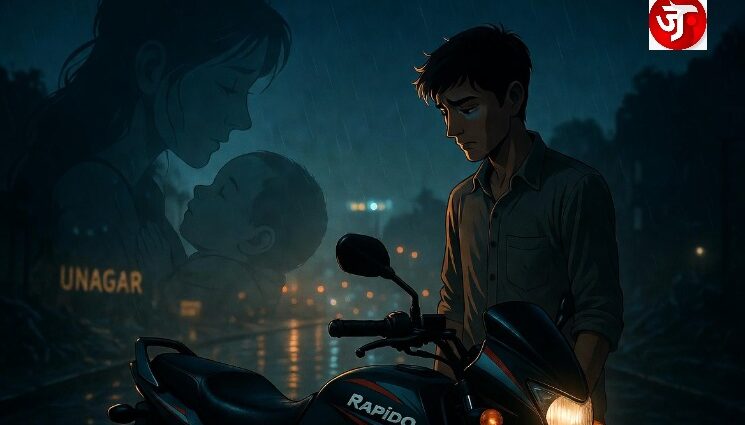
In the narrow lanes of Delhi’s Uttam Nagar, hope died a violent death on June 26, 2026. Mohammed Uzaib, a 23-year-old Rapido driver and brand-new father, was abducted, tortured for nearly eight agonizing hours, and left to die, all over a remaining loan balance of just ₹8,000.
Uzaib had borrowed ₹50,000 from a man named Sandeep to cover his wife’s delivery expenses. By all accounts, he had repaid ₹42,000 faithfully. But the debt collectors, Sandeep, Lalit, and Mohit, wanted blood for the rest. Just 15 days earlier, they had stormed into his home in his absence, vowing to “break all his bones.” On that fateful night, they made good on their threat.
Dragged to a desolate spot in Najafgarh, Uzaib endured a nightmare of unrelenting fury. His assailants beat him mercilessly with sticks, stabbed him with a sharp object, and crushed his internal organs in a frenzy of violence that lasted through the night. When they were done, they dumped his broken body outside his family home like discarded waste.
His devastated family rushed him to the hospital, but it was too late. The sole breadwinner, whose father had already passed away, slipped away without ever holding his newborn son. His mother, Rabiya, is shattered beyond words. “They could have shot him, they could have caused an accident… but why did my child have to writhe in pain?” she cried. “I never even slapped my son. He must have screamed ‘Mummy, Mummy’ all night. I couldn’t save him.”
His wife drifts in and out of consciousness, drowning in grief. His brother, Zaib, struggles to recount the horror. A young life full of promise reduced to a statistic in the brutal underbelly of debt recovery in the capital.
As the family grapples with unimaginable loss, questions linger in the air: How many more lives must be shattered before such merciless violence over petty sums is stopped? Delhi mourns another innocent soul taken too soon, while a mother’s wails echo as a haunting reminder of humanity’s darkest edges.
3 web pages