








The next few weeks may determine whether this uneasy pause would stretch to peace
August 26, 2026
For the first time in months, there are signs that the United States-Iran war may be moving away from the battlefield and back toward the negotiating table. But declaring the war over would be premature. The guns may be quieter, yet the pressure campaign continues, the Strait of Hormuz remains largely closed and both Washington and Tehran are still trying to extract concessions from the other.
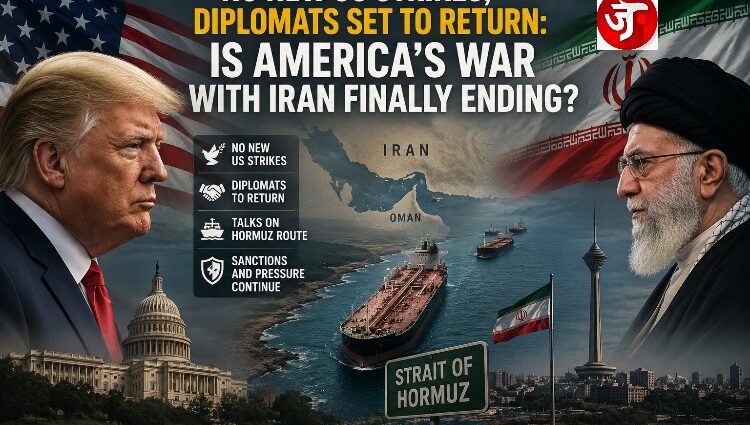
The clearest signal of a possible shift came from Washington’s decision to begin returning diplomatic personnel to several US missions across the Middle East that had been evacuated or downsized after the outbreak of hostilities. Staff are being phased back into posts in countries including Lebanon, Israel, Saudi Arabia and Iraq, while additional missions are expected to increase staffing. The move reflects a US assessment that the immediate danger of a major escalation has declined, although embassies will initially operate below full strength.
That matters because diplomats normally return when governments believe the immediate prospect of missiles and bombs has receded. Governments, rather sensibly for once, tend not to send their embassy staff back into a war zone simply for the scenery.
At the same time, Washington appears to be shifting its strategy from direct military strikes toward economic and maritime pressure. US Secretary of State Marco Rubio has reportedly told allied governments that the United States is moving away from further strikes and relying increasingly on sanctions and a naval blockade to pressure Tehran.
The change suggests that Washington may have concluded that another major bombing campaign would bring diminishing returns while carrying enormous political, military and economic risks.
But this is not peace.
Reuters describes the conflict, now six months old, as having settled into a form of “trench warfare” centred on energy, sanctions and control of the Strait of Hormuz. The waterway normally carries roughly one-fifth of global oil and liquefied-natural-gas shipments, making its continued disruption a problem far beyond the shores of Iran and the Gulf.
The most important diplomatic movement is taking place around Hormuz.
Iran and Oman have been working on a temporary maritime corridor that could allow some shipping to move through the strategically vital waterway. Mine-clearing operations and discussions about a more permanent navigation arrangement are also underway. Pakistan has simultaneously been involved in diplomatic efforts aimed at easing the US-Iran confrontation.
Yet Tehran says the Strait is not fully open.
Iranian Deputy Foreign Minister Kazem Gharibabadi has insisted that Washington must return to its commitments under an earlier memorandum of understanding before the waterway can be completely reopened. Iran therefore continues to treat access to Hormuz as a bargaining chip, while Washington is attempting to reduce Tehran’s leverage over global energy supplies.
That leaves both sides in an awkward position.
Washington appears reluctant to launch another major offensive. Tehran appears unwilling to surrender its leverage without sanctions relief and guarantees. Neither side wants to look as though it has backed down.
And that is precisely why the present moment may be more accurately described as a strategic pause than an ending.
The conflict has already demonstrated how fragile previous pauses can be. Earlier ceasefire arrangements halted large-scale fighting but failed to resolve the fundamental disputes over Iran’s nuclear programme, sanctions, maritime access and the broader security architecture of the Middle East. The Council on Foreign Relations notes that those core disagreements remain unresolved.
There are nevertheless reasons for cautious optimism.
The return of American diplomats, the absence of a new large-scale US strike campaign, negotiations involving Oman and Pakistan, and efforts to restore shipping through Hormuz all point in the same direction: both sides appear increasingly interested in managing the conflict rather than expanding it.
Economic pressure may ultimately prove more important than another round of airstrikes. The Trump administration is now betting that sanctions, blockade pressure and the restoration of alternative energy routes can force Tehran toward an agreement without requiring another full-scale military operation. Iran, meanwhile, is trying to preserve enough economic and strategic leverage to ensure that any settlement comes with meaningful concessions.
The danger is that diplomacy can collapse just as quickly as it begins.
A miscalculation in the Gulf, an attack on shipping, a dispute over Hormuz or a sudden military incident could once again push Washington and Tehran toward confrontation. The latest diplomatic openings therefore represent an opportunity, not a guarantee.
For now, the most accurate answer to the question “Is America’s war with Iran finally ending?” is: perhaps, but not yet.
The character of the conflict appears to be changing. The battlefield is becoming quieter while sanctions, blockades, negotiations and energy politics take centre stage. The United States may be preparing for a prolonged pressure campaign rather than another bombing campaign, while Iran is testing whether diplomacy can secure an exit without surrendering its remaining leverage.
The next few weeks may determine whether this uneasy pause becomes a genuine peace process or merely another intermission in a war that has already lasted far longer than either side originally imagined.
JANPATH NEWS NETWORK (JNN)
Independent. Fearless. On the People’s Path.