








Trump’s threats, Iran’s underground nuclear complex and the dangerous politics of keeping the nuclear option in the public imagination
November 4, 2026
The most disturbing question emerging from the escalating confrontation between Washington and Tehran is no longer simply whether the United States can destroy Iran’s underground nuclear infrastructure. It is whether the pursuit of military superiority is beginning to erode one of the most important restraints in modern warfare: the refusal to use nuclear weapons.
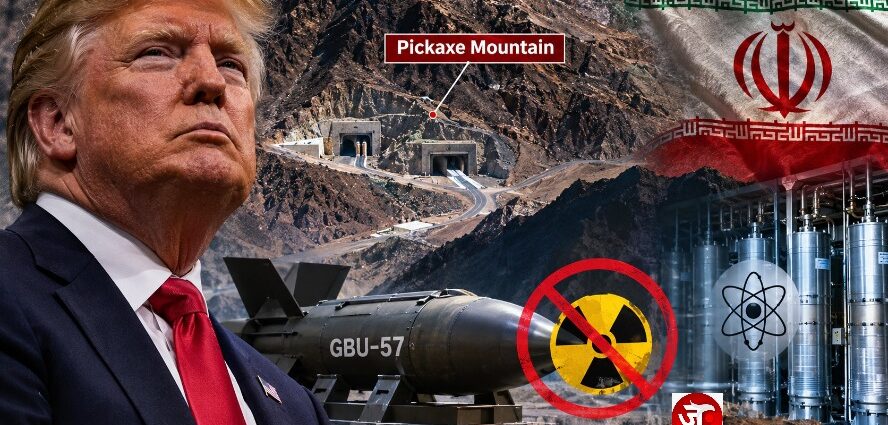
The immediate focus is Pickaxe Mountain, a heavily fortified underground complex near Iran’s Natanz nuclear facility. Its existence is real. Its strategic significance is considerable while precise purpose, however, remains unverified.
And now, amid speculation about an American nuclear strike, the world finds itself confronting a question that should never become an ordinary subject of political conversation: could a US president contemplate using a nuclear weapon to destroy an underground facility that conventional bombs may struggle to penetrate?
Around November 1-2, 2026, Tucker Carlson posted on X that the Trump administration “may be within days of launching a nuclear strike on Iran,” under pressure from Israeli Prime Minister Benjamin Netanyahu. He named the target as Pickaxe Mountain (also known as Kuh-e Kolang Gaz La or Pickax Mountain) near Natanz in central Iran, claimed Israeli intelligence said enrichment had restarted there, and argued that no conventional US weapon could penetrate roughly 300 feet of solid granite, thus a nuclear strike was the only option.
He cited an unnamed “informed observer,” suggested a possible decision around November 7, and warned of wider escalation (including potential World War III precedents). He provided no documents or verifiable sources
In matters involving nuclear weapons, the difference between evidence and speculation is not a technicality. It can shape international perceptions, provoke reactions and potentially influence the behaviour of governments.
Trump’s own words: A threat, followed by a contradiction
In an October 15, 2026, interview with Newsmax presenter Rob Finnerty, Donald Trump addressed reports that the United States was considering deploying the GBU-43/B Massive Ordnance Air Blast bomb, popularly known as the MOAB or the ‘Mother of All Bombs’.
The exchange is particularly important because Trump was asked directly whether the weapon was nuclear.
He responded:
“No, no, it’s not nuclear at all.”
He went further:
“No, I wouldn’t use nuclear. We don’t have to.”
But the interview did not amount to a declaration that military action against Iran was over.
Discussing Pickaxe Mountain, Trump said:
“Now we’re looking at Pickaxe Mountain. We may have to go there. We’ll take a shot at that one. We’ll knock it out fast.”
When asked whether American troops would be deployed on the ground, he replied that he did not envisage that option.
There are two separate messages here.
First, Trump publicly rejected nuclear weapons as necessary for the operation. Second, he maintained the threat of another American strike against an underground Iranian facility.
His language suggests confidence in conventional military capabilities, although it does not establish that American planners have found a reliable way to destroy everything beneath the mountain.
The world cannot afford a second Hiroshima
Pickaxe Mountain may be buried beneath layers of granite, reinforced tunnels and military secrecy. But the danger surrounding it reaches far beyond Iran.
The real test of American power is not whether Washington can destroy what lies beneath a mountain. It is whether it can exercise restraint when its most destructive weapons are available. Military superiority without political judgement is not strength; it is a recipe for catastrophe.
Trump has publicly ruled out nuclear weapons. That assurance must be taken seriously, but so must the continuing threats of military escalation. And the world must not confuse the existence of a nuclear capability with proof of an intention to use it.
If America’s objective is exclusively to prevent Iran from developing nuclear weapons, why has the confrontation expanded into attacks and threats involving military installations, shipping and energy infrastructure?
And what happens if Iran retaliates by threatening the Strait of Hormuz or disrupting oil exports?
The consequences would extend far beyond Washington and Tehran.
India, China, Japan and much of Europe depend on energy supplies moving through the Gulf. India, in particular, would face serious economic consequences from a prolonged disruption.
The question is no longer how deeply Iran can bury its nuclear infrastructure; it is how deeply humanity has buried the lessons of 1945.
JANPATH NEWS NETWORK (JNN)
Independent. Fearless. On the People’s Path.