







Trump says Iran wants an agreement to end the war, but its terms are unacceptable, but why does he keep vacillating?
Saturday, November 21, 2026
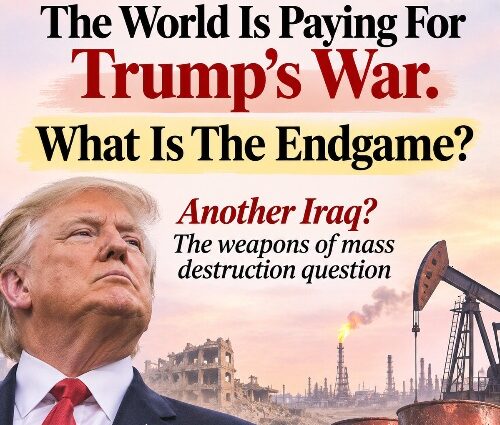
As energy prices surge, black-market fuel markets thrive and inflation spreads, Trump rejects Tehran’s proposed deal without clearly explaining what terms he would accept. The world is left paying for a war whose endgame remains uncertain.
Donald Trump says Tehran wants a deal but that its terms are unacceptable. Yet the American President has offered little public explanation of precisely which elements he rejects or what concessions would persuade him to end the conflict because he does The uncertainty is becoming a crisis in itself.
Iran has consistently maintained that its nuclear programme is intended for peaceful purposes, particularly civilian energy production, not the development of nuclear weapons. Tehran has pointed to a religious ruling, or fatwa, against nuclear arms and its obligations under the Nuclear Non-Proliferation Treaty (NPT). In a June 2026 memorandum of understanding, Iran also reaffirmed its commitment not to acquire or develop nuclear weapons. These assurances, however, remain at the centre of an intensifying confrontation, following US-Israeli strikes in 2025 and 2026.
On June 17, 2026 there was a memorandum of understanding and according to NBC News and the United States Institute of Peace, the memorandum of understanding was signed digitally by representatives of both countries, with Trump confirming his signature at Versailles.
The arrangement covered an end to military operations, the Strait of Hormuz and a 60-day period for further negotiations. But nothing ended and on November 20, 2026 at the White House news conference
Trump said:
“And I’m not George Bush. Watch my lips. No, you don’t have to watch my lips. But Iran will never have a nuclear weapon. Ever.”
He also said:
“We spoke extensively about ensuring that Iran will never have a nuclear weapon.”
The consequences are travelling far beyond the Middle East.
In an interview with Fox News correspondent Jacqui Heinrich in Shenzhen, China, on November 18, Trump announced that Iran was looking at alternative weapons because, according to him, American and Israeli action had made its nuclear programme more difficult to pursue.
He said:
“There is indication that Iran is looking at gases, looking at bio, because we’ve shut them out with the nuclear. Nuclear is much harder.”
He went on to describe biological weapons as “not nice” and added a threat that has become almost routine in his public vocabulary:
“Look, if it does happen, we wipe them out.”
The claims of Iran possessing chemical and biological warfare are ambiguous.
The world’s energy markets are paying the price.
The Strait of Hormuz, through which a substantial proportion of the world’s energy supplies normally passes, has become the central bargaining chip in this confrontation. Shipping disruptions, damaged infrastructure, rising freight charges and war-risk insurance premiums have made energy more expensive and less predictable.
The figures are alarming. By November 20, European benchmark natural-gas prices had risen 168% and Asian LNG prices 156% against their pre-war February benchmarks. European inflation reached 4% in October, with energy inflation climbing to 20.8%.
India, too, is facing a substantial economic burden. Its oil import bill rose nearly 54% during the first seven months of the current financial year, despite only a marginal increase in import volumes. Its dependence on imported crude and Gulf energy supplies leaves the economy particularly exposed.
And when legitimate supplies become expensive or difficult to obtain, another market emerges. Shortages, hoarding, diversion and black-market pricing place an additional burden on households and businesses. India’s government has already directed enforcement agencies to investigate LPG hoarding and black marketing.
The people who have no influence over Washington’s military calculations are nevertheless paying for them through cooking fuel, transport, electricity, food and everyday essentials.
What exactly is unacceptable about Iran’s proposal?
Tehran’s negotiating demands have included an end to hostilities across the region, the lifting of American sanctions and its naval blockade, arrangements governing passage through the Strait of Hormuz, compensation for wartime damage and the release of frozen Iranian assets.
Washington, meanwhile, wants secure international shipping and a credible resolution of the Iranian nuclear question. Gulf countries are attempting to broker a narrower arrangement that would reopen shipping in exchange for limited sanctions relief and wider negotiations.
These are substantial differences. But they are also precisely the issues negotiations are supposed to address.
Trump’s repeated rejection of proposals without a clearly articulated public endgame raises a legitimate question: Is Washington pursuing a defined diplomatic objective, or is the objective itself continuing to shift?
Trump has previously suggested that the conflict was effectively over, only to return to warnings and the possibility of renewed military action. His administration now faces the difficult task of explaining what victory means, what would end the military campaign and what guarantees would prevent another round of fighting.
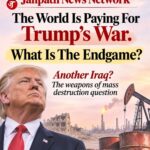
Another Iraq? The weapons of mass destruction question
There is a historical precedent that the world cannot afford to forget.
In 2003, the United States invaded Iraq under the argument that Saddam Hussein possessed weapons of mass destruction. The central stockpile claims were not substantiated by the subsequent investigations. The war nevertheless destroyed a country, destabilised a region and cost countless lives.
Iran’s nuclear programme raises legitimate international security concerns. But concerns are not proof, and the possibility of a nuclear threat cannot become a substitute for transparent evidence.
The world deserves to know what intelligence is driving American decisions, what specific threat is being addressed, and whether diplomatic alternatives have genuinely been exhausted.
The question is not whether Iran should be exempt from scrutiny. It is whether the same scrutiny should apply to the government deciding to wage war.
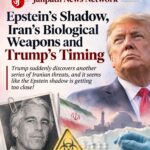
And then there is the Epstein shadow
There is another uncomfortable political question circulating around Washington: Does the continuing Iran conflict divert public attention from the Epstein files and the political embarrassment surrounding their release?
The timing has fuelled speculation, particularly among Trump’s critics. But there is, as yet, no established evidence that the President initiated or is prolonging the war to suppress the Epstein controversy. Disinformation networks have also exploited this narrative, making careful verification essential.
Still, the broader question of political accountability cannot simply disappear because the country is at war.
A government must be able to address foreign threats and domestic controversies simultaneously. One cannot become a permanent excuse for avoiding the other.
Who pays for a war without an endgame?
Trump may see military pressure as leverage. Netanyahu may see renewed operations as an opportunity to weaken Iran’s military capabilities. Tehran may see control over vital shipping routes as its strongest negotiating card.
But the consequences are not confined to these leaders.
They reach the Indian household paying more for essential supplies, the European family facing higher heating bills, the Asian manufacturer struggling with energy costs and the developing country already fighting inflation.
A war can be started by governments, but its economic consequences are distributed among people who never voted for it.
The most important question facing Washington is therefore not whether Iran wants a deal or whether Trump considers its terms acceptable.
It is this: What is the endgame, and how much more of the world’s economy must be put at stake before someone is prepared to answer?
JANPATH NEWS NETWORK (JNN)
Independent. Fearless. On the People’s Path.