


JNN’s NIGHTLY NEWS ROLL
Tuesday, July 14, 2026
As night falls across India, the country closes another turbulent day with a protest entering a dangerous phase, a horrifying crime raising questions about the collapse of basic humanity, billions of rupees moving through the markets, and new controversies reaching the corridors of power. Beyond India’s borders, war clouds continue to gather over the Middle East as the confrontation between the United States and Iran threatens to reshape the global energy order.
Tonight, however, we begin at Jantar Mantar, where the battle is no longer merely political. It is becoming a battle against the limits of the human body.
DAY 17: SONAM WANGCHUK’S HUNGER STRIKE ENTERS A CRITICAL PHASE:
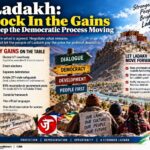
Ladakhi engineer, innovator and climate activist Sonam Wangchuk has entered the 17th day of his indefinite hunger strike, demanding accountability over the NEET-UG 2026 paper leak scandal and the resignation of Union Education Minister Dharmendra Pradhan.
Reports from the protest site indicate that Wangchuk’s physical condition is deteriorating. He is said to be suffering from muscle loss, severe pain, weakness, low blood sugar and declining physical reserves. Yet his message to those pleading with him to end the fast remains unwavering:
Sonam says, “Don’t ask me to end my fast. Ask the government why they won’t even have a dialogue.” It is a sentence that now hangs heavily over the protest.
For seventeen days, Wangchuk has refused food. The larger question tonight is no longer simply how long he can continue, but how long the government can remain silent as his health deteriorates in full public view.
The protest also received an emotional intervention from actor Omi Vaidya, remembered by millions as Chatur from 3 Idiots. Vaidya appealed to the public not to allow the man widely associated with the real-life inspiration behind the film’s Phunsukh Wangdu to die while the country watches. His appeal has added another layer of urgency to a protest that is rapidly becoming a national moral and political test.
A THREE-YEAR-OLD CHILD, AN ALLEGED RAPE, AND A PANCHAYAT’S SHOCKING RESPONSE
From protest in Delhi to horror in Jharkhand. In Palma village in Gumla district, a three-year-old girl was allegedly raped in a case that has become even more disturbing because of what reportedly happened afterward.
Instead of immediately turning to the criminal justice system, the village panchayat allegedly attempted to “settle” the matter by imposing a ₹1 lakh fine on the accused, identified in reports as 18-year-old Sunil Lohra. According to reports, ₹20,000 was collected on the spot.And then came the detail that has shocked the country: the money was allegedly used for a liquor-and-chicken celebration.
Police, reportedly acting on a tip-off, arrived during the gathering and arrested the accused.
The case now raises questions far beyond the alleged crime itself. Who gave a village body the moral or legal authority to treat the alleged rape of a three-year-old child as a dispute that could be settled with money? And if the allegations about the celebration are established, what action will be taken against those who participated in such an obscene mockery of justice?
Appeals have been directed to Jharkhand Chief Minister Hemant Soren, demanding action not only against the accused but also against any panchayat members found responsible for attempting to suppress or trivialise the case.
₹11,693 CRORE SBI FUNDS MANAGEMENT IPO HITS THE MARKET
While politics and tragedy dominated the national conversation, India’s financial markets witnessed one of the biggest corporate events of the day. The SBI Funds Management IPO, valued at approximately ₹11,693 crore, opened for subscription with a price band of ₹545 to ₹574 per share.
The offering attracted significant market attention, with analysts watching it as a test of investor confidence at a time of global volatility, interest-rate uncertainty and geopolitical risk.
The early response has been interpreted by market observers as another sign that investors remain willing to back large, established financial institutions and quality assets even when the wider global environment looks increasingly unstable.
Markets, after all, have developed humanity’s peculiar ability to discuss billions of rupees with remarkable calm while the geopolitical world appears to be standing beside a petrol pump holding a box of matches.
RAM MANDIR TRUST FILES: QUESTIONS REMAIN, DOCUMENTS STAY CLOSED
Another controversy continues to simmer around files connected to the Ram Mandir Trust. The Ministry of Home Affairs has reportedly declined to release certain documents, citing concerns over the safety of individuals, while the Supreme Court continues to seek status reports concerning investigations into alleged embezzlement linked to donations.
The controversy is unlikely to disappear quietly.
Whenever public donations, powerful institutions and withheld records meet in the same story, questions inevitably multiply. The central issue now is whether the investigations will produce clear answers and whether the public will eventually be told enough to understand what happened to money donated in faith.
THE CITIZENSHIP DEBATE RETURNS: FROM BELONGING TO SUSPICION
Away from the immediate headlines, a deeper constitutional debate is gathering attention.
Political scientist Dr. Niraja Gopal Jayal has drawn renewed focus to the implications of the NRC and CAA, particularly what she describes as a fundamental shift in the relationship between the citizen and the state: from a “presumption of belonging” to a “presumption of alienage.” The phrase cuts to the heart of one of modern India’s most consequential debates.
Who must prove that they belong? Is citizenship something the state presumes until evidence proves otherwise, or must ordinary people repeatedly establish their right to belong to the country of their birth, ancestry and life?
The argument is larger than paperwork. It reaches into the meaning of citizenship itself and into the balance of power between the individual and the state.
Across India tonight, political developments, citizenship debates and weather alerts continue to unfold. But the world beyond India is moving toward an even more dangerous hour.
WORLD NEWS
US-IRAN CONFRONTATION ESCALATES AGAIN
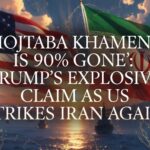
The crisis between the United States and Iran has intensified sharply following further American military strikes. President Donald Trump has announced the reinstatement of a naval blockade of Iranian ports, dramatically increasing pressure on Tehran and raising new fears over the security of global shipping and energy supplies.
Trump has also argued that oil-rich Middle Eastern nations, including Saudi Arabia, Qatar and the United Arab Emirates, should reimburse the United States for the cost of defending the Strait of Hormuz, one of the most strategically important energy corridors on Earth. The implications are enormous.
Any sustained disruption around the Strait of Hormuz could affect oil prices, shipping costs, inflation and economic growth far beyond the Middle East. A conflict thousands of kilometres away can arrive at an ordinary household through the price of petrol, transport, food and electricity. Globalisation, it turns out, is remarkably efficient at delivering crises.
Trump also made another extraordinary claim concerning Mojtaba Khamenei, saying he was “90 percent gone.” The precise meaning and factual basis of the remark remain subjects of intense scrutiny amid the fog of war, competing claims and rapidly changing battlefield information.
Tonight, one fact is unmistakable: the confrontation is no longer merely rhetorical.
Every new strike, blockade and threat increases the possibility of a wider regional conflict.
JAMIE RASKIN CALLS FOR THE RELEASE OF DR. HUSSAM ABU SAFIA
In the United States, Congressman Jamie Raskin has called for the release of Palestinian doctor Dr. Hussam Abu Safia, who was detained by Israeli forces following the December 27, 2024 operation at a hospital in Gaza.
The case has become an international focus for human-rights advocates and medical organisations concerned about the detention and treatment of healthcare workers during the Gaza war.
Raskin’s intervention adds another prominent American political voice to demands for answers about Abu Safia’s detention and for his release.
AND SO ENDS JULY 14, 2026
A climate activist goes without food for a seventeenth day, asking why dialogue appears harder than suffering.
A three-year-old child becomes the centre of an alleged crime so horrifying that the reported attempt to “settle” it becomes a second scandal in itself.
Billions move through the stock market.
Questions remain locked inside government files.
India debates who belongs.
And across the Middle East, warships, missiles, oil routes and political threats push the world closer to another dangerous threshold.
This is the world tonight: restless, divided, wounded and moving faster than wisdom can keep up.
But the questions remain.
Who will speak?
Who will answer?
Who will be held accountable?
And who will refuse to look away?
This is JNN’s Nightly Roll.
The day may be ending. The story is not.
JANPATH NEWS NETWORK
The People’s Path. The People’s Voice.