







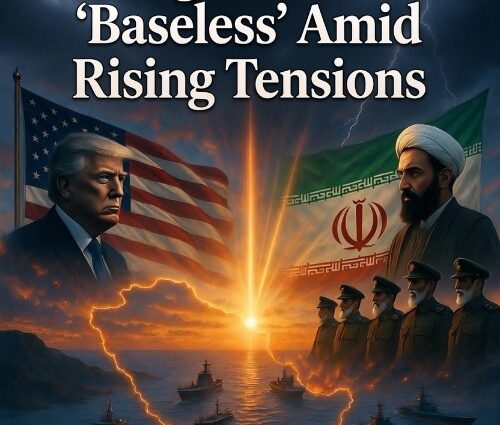
TEHRAN/WASHINGTON – July 9, 2026: In a dramatic escalation of rhetoric, Iran has delivered a sharp rebuke to U.S. President Donald Trump, denouncing his recent remarks as “rude,” “arrogant,” and “baseless.” Iranian officials have warned that any additional military action from the United States would elicit a “crushing response,” underscoring the growing volatility in the region.
Tensions in the Middle East have reached a boiling point following a series of military strikes, brittle ceasefire attempts, and escalating confrontations between Iran, the United States, and Israel. What began as a complex dispute involving sanctions, nuclear negotiations, and the strategic security of the Strait of Hormuz has now transformed into a daunting struggle for military deterrence and political influence, raising fears that a single misstep could ignite a far-reaching regional conflict.
The Islamic Revolutionary Guard Corps (IRGC) and Iran’s military establishment have accused Washington of resorting to inflammatory rhetoric to mask its own strategic failures. Senior military leadership has affirmed their commitment to what they term “offensive and crushing operations” against U.S. and Israeli interests if Iranian sovereignty comes under threat.
Echoing this stern message, Parliament Speaker Mohammad-Bagher Ghalibaf characterized President Trump’s remarks as reckless provocations. He cautioned that such threats risk plunging the entire Middle East into deeper instability. Iranian officials maintain that their military stance is defensive, aimed at safeguarding national sovereignty rather than inciting wider warfare.
This fierce rhetoric comes in the wake of increased pressure from Washington. President Trump has issued repeated warnings of potential military actions against Iranian infrastructure, threatened to impose further sanctions, and insisted on enhanced Iranian compliance regarding maritime security, regional activities, and nuclear negotiations. The administration is also focused on ensuring the uninterrupted navigation of the strategically vital Strait of Hormuz, a critical artery for global energy supplies.
Iran has firmly rejected what it perceives as coercive diplomacy, dismissing temporary ceasefire proposals. Iranian leaders argue that only a permanent agreement that includes substantial sanctions relief can lay the groundwork for true peace. They contend that negotiations under military pressure cannot yield lasting stability.
As the diplomatic standoff intensifies, so does military escalation. Recent weeks have seen U.S. strikes on specific Iranian military sites, strategically avoiding major oil infrastructure, an approach some analysts interpret as an effort to apply military pressure without causing significant economic disruption. Iran’s response has included missile and drone attacks targeting U.S. military installations in the Gulf, alongside stern warnings that countries aiding attacks against Iran could themselves become legitimate military targets.
President Trump has declared the recent ceasefire efforts a failure, amplifying fears that diplomacy is on the verge of giving way to outright confrontation.
Beneath the surface of this heated rhetoric lies a protracted strategic contest. For decades, the U.S. and Iran have been enmeshed in disputes over Tehran’s nuclear program, its regional aspirations, proxy groups, economic sanctions, and freedom of navigation through the Gulf. The Strait of Hormuz remains a focal point in this rivalry, with any significant disruption threatening to send shockwaves through global energy markets and impact economies far beyond the Middle East.
International mediators, including regional partners like Qatar, are diligently exploring diplomatic channels to avert a wider conflict. Nevertheless, every exchange of threats, missile launches, and retaliatory strikes constricts the space for peaceful negotiations.
For now, the conflict is as much defined by powerful words as by military might. With both Washington and Tehran resolutely maintaining their stances, and armed forces on heightened alert across the region, the specter of another dangerous escalation looms large over the Middle East and the global economy