







In the mist-covered mountains of Highland Papua, where villages cling to steep ridges and small aircraft are often the only lifeline to the outside world, a single act of violence has once again thrust one of the world’s least understood conflicts into international headlines.
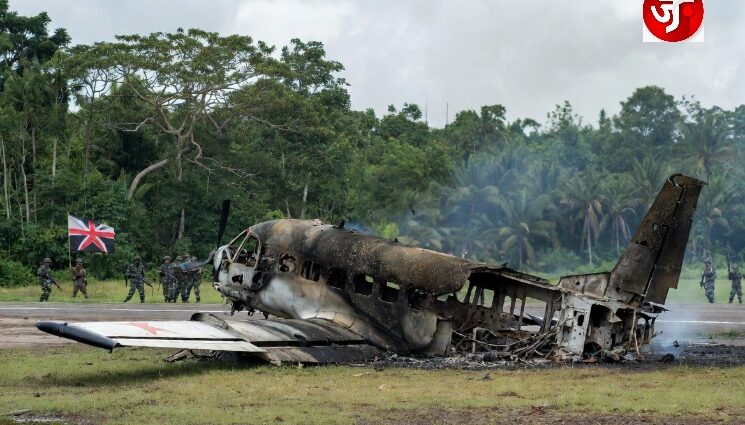
On July 2, 2026, a small propeller aircraft operated by Indonesian airline PT AMA landed at a remote airstrip in Balinggama village, Yahukimo Regency. The aircraft, registration PK-RCY, had departed from Wamena carrying food, fuel, mail, and seven Papuan passengers, supplies that sustain communities cut off from roads and modern infrastructure.
At the controls was American pilot Nicholas Francis Gosselin, reportedly around 30 years old, an experienced civilian pilot serving one of the world’s most difficult aviation routes. Shortly after landing, communication was lost. Hours later, reports emerged that the aircraft had been burned and Gosselin was feared dead.
The West Papua National Liberation Army (TPNPB), the armed wing of the Papuan independence movement, claimed responsibility. Its spokesperson, Sebby Sambom, said fighters had opened fire because the aircraft allegedly violated their warning against flights they believe support Indonesian military operations.
Whether every detail of the rebels’ account is ultimately verified or not, the incident has exposed a painful truth: the conflict in Papua remains a wound that has never healed. The roots of the Papuan conflict stretch back more than six decades.
The western half of New Guinea was once administered by the Dutch, who had signalled support for eventual Papuan self-determination. But in 1962, amid Cold War pressures and fears that Indonesia might drift toward the Soviet bloc, the Netherlands transferred the territory to temporary United Nations administration, which then handed it to Indonesia.
In 1969 came the deeply controversial “Act of Free Choice.” Rather than holding a one-person-one-vote referendum, Indonesian authorities selected just over a thousand tribal representatives who unanimously voted to remain part of Indonesia. Jakarta regards the process as legally settled and internationally recognised.
Many Papuans, however, consider it a betrayal. To them, the referendum was conducted under coercion and denied an entire people the right to determine their own future. That grievance has fuelled an insurgency that has endured for generations.
A Land of Extraordinary Wealth and Extraordinary Poverty: Papua is rich beyond imagination. Its mountains hold some of the world’s largest deposits of gold and copper. Vast forests, rivers, and natural resources have attracted enormous economic interest. Yet many indigenous Papuans continue to live in poverty and isolation. The region has long witnessed allegations of human rights abuses, displacement, restrictions on political expression, and tensions arising from demographic changes and migration from other parts of Indonesia.
For Jakarta, Papua is an inseparable part of the republic and a strategic region whose territorial integrity cannot be compromised. For many Papuan nationalists, however, the issue is not merely economic or administrative. It is existential, about identity, dignity, and a belief that they were denied their right to choose their political destiny.
In recent years, separatist fighters have increasingly viewed these aircraft with suspicion. The rebels argue that some civilian flights assist Indonesian security operations by transporting personnel or logistical supplies into conflict zones. The Indonesian government strongly disputes such allegations and insists that civilian aviation serves humanitarian and public needs.
Caught in the middle are the pilots. Many are foreigners or Indonesians who accept dangerous assignments to keep isolated communities connected to the outside world.
The risks are not theoretical. In 2023, New Zealand pilot Phillip Mehrtens was taken hostage by Papuan rebels and held for nineteen months before being released. His captivity highlighted the deteriorating security situation and the rebels’ willingness to target foreigners to draw international attention.
The apparent killing of an American pilot now marks an even more troubling escalation.
For decades, attacks directly targeting Americans carried enormous geopolitical consequences. Many non-state actors feared provoking Washington. That calculation appears to be changing. From the Sahel to Myanmar, from Yemen to parts of Latin America, armed groups increasingly operate in a world that is becoming more fragmented and multipolar. They perceive great powers as distracted, cautious, and increasingly reluctant to become entangled in distant conflicts.
The rebels explicitly framed the attack as a warning not only to Jakarta but also to the United States. Whether this reflects strategic thinking or desperate provocation, it demonstrates a growing confidence among some insurgent movements that even the killing of a foreign national can be used to force global attention onto local grievances.
This is the dangerous new arithmetic of modern conflict. Small groups in remote regions can create international repercussions with a single act of violence, amplified instantly through videos, social media, and global news coverage. Yet beneath the geopolitics lies a simpler tragedy. A pilot carrying essential supplies to isolated communities appears to have lost his life. Seven Papuan passengers survived an ordeal that could easily have become a mass casualty event. Families are grieving, communities are frightened, and another chapter has been added to a conflict already drenched in suffering.
The incident is a reminder that unresolved historical grievances do not simply disappear with time. They smoulder beneath the surface, sometimes for generations, until they erupt in unexpected and devastating ways.