










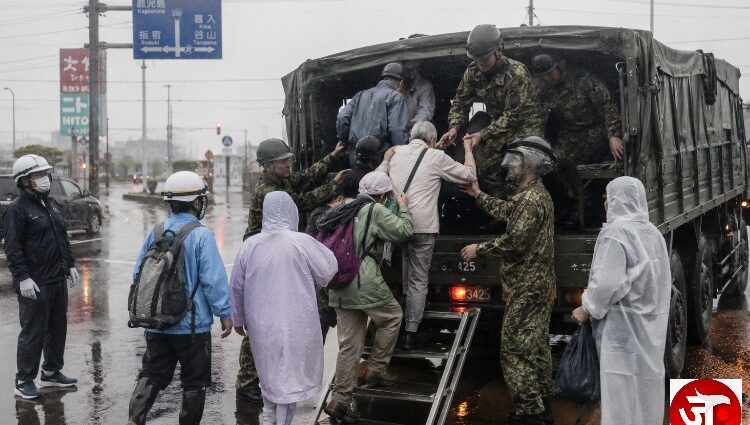
As Typhoon Dolphin bears down on southwestern Japan with sustained winds of 144 km/h, gusts approaching 198 km/h, torrential rain and dangerous waves, the country has responded not with panic, but with precision.
Nearly 260,000 residents across Kagoshima and Okinawa have been ordered to evacuate. More than 500 flights have been cancelled, Toyota has suspended operations at nine factories, emergency shelters have been opened, and disaster response teams have been deployed well before the storm’s arrival. Authorities have warned that the typhoon’s slow movement could unleash prolonged downpours capable of triggering flash floods, landslides and the dreaded “linear rain bands,” which can dump catastrophic amounts of rain over the same communities for hours.
Remarkably, despite the approaching storm, no casualties have been confirmed. That is not because Japan has escaped danger. It is because the nation has spent generations preparing for it.
Japan lies on the Pacific Ring of Fire, one of the most geologically active regions on Earth. Every year, the country experiences thousands of earthquakes, seasonal typhoons, volcanic eruptions and the constant threat of tsunamis. Few nations have endured so many natural hazards. Fewer still have responded by turning preparedness into a national culture.
Following devastating tragedies such as the 1995 Great Hanshin (Kobe) Earthquake, the 2011 Great East Japan Earthquake and Tsunami, and numerous destructive typhoons, Japan transformed painful lessons into lasting reforms. Building regulations became among the strictest in the world. Homes, bridges, railways and skyscrapers are engineered with sophisticated earthquake-resistant technology, while flood barriers, reinforced riverbanks and advanced drainage systems help reduce the impact of extreme rainfall.
Preparedness begins in childhood. Japanese schoolchildren regularly participate in earthquake and tsunami evacuation drills. Offices, factories and neighbourhood associations conduct emergency exercises throughout the year. Families are encouraged to maintain emergency kits stocked with food, water, medicines, flashlights, portable radios and essential supplies. Every 1 September, Japan observes Disaster Prevention Day, when millions of people take part in nationwide drills, ensuring that emergency procedures become second nature rather than a last-minute reaction.
Technology plays an equally vital role. The Japan Meteorological Agency operates one of the world’s most advanced monitoring and early warning systems, using satellites, Doppler radar, seismic networks and sophisticated forecasting models to provide timely alerts. Emergency notifications are pushed directly to mobile phones, television and radio broadcasts within seconds, giving residents precious time to seek safety.
That resilience is now being tested once again in Kumamoto Prefecture, where approximately 6,700 people remain displaced after last week’s magnitude 7.1 earthquake. With Typhoon Dolphin threatening to drench already unstable hillsides, authorities have acted swiftly to protect those still living in temporary shelters, demonstrating how disaster planning extends beyond a single event to manage multiple overlapping emergencies.
Japan understands a profound truth: natural disasters cannot be prevented, but human disasters often can. Science, disciplined planning, public trust and civic responsibility have become the country’s strongest defence against nature’s fury.
As Typhoon Dolphin approaches, Japan is once again offering the world a powerful lesson. Resilience is not built when the winds begin to howl. It is built through years of investment, education, preparation and collective responsibility. When disaster finally arrives, Japan does not improvise. It executes a plan, and in doing so, saves countless lives
JANPATH NEWS NETWORK (JNN)
Independent. Fearless. On the People’s Path.