
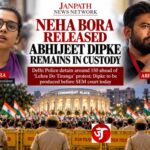

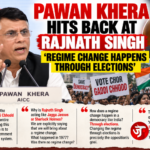
Following the Government’s Crackdown on Protests, Dipke, Neha Bora, Kapil Sibal, Prashant Bhushan, Prakash Raj and Others Mount a Fiery Challenge to the Government
October 15, 2026: At a stormy Press Club of India conference, activists, lawyers and public figures accuse the government of crushing dissent over SIR, question the Election Commission’s credibility and demand CEC Gyanesh Kumar’s resignation. Ahead of the October 16 Tiranga march, the message is unmistakable: voting rights are not a government favour, and the Constitution is not the property of those in power.
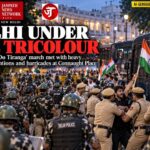
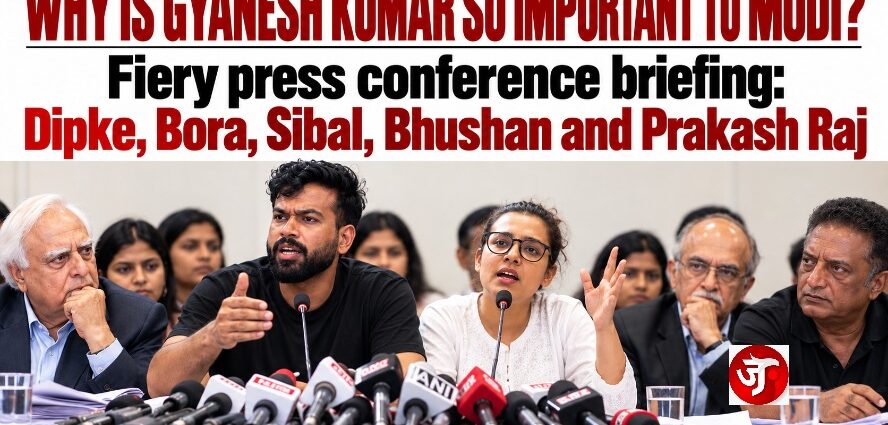
The question, posed by Cockroach Janta Party (CJP) founder Abhijeet Dipke, became the defining challenge of a fiery press conference at the Press Club of India on Thursday. As India’s battle over the Special Intensive Revision (SIR) of electoral rolls intensifies, Dipke and a formidable group of political voices, lawyers and activists accused the government of responding to demands for electoral accountability with barricades, detentions and an extraordinary security clampdown.
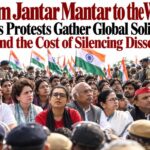
The gathering brought together Dipke, AISA national president Neha Bora, senior advocates Kapil Sibal and Prashant Bhushan, actor-activist Prakash Raj, SFI representative Aishe Ghosh and other campaigners. Their demand was direct: Chief Election Commissioner Gyanesh Kumar must resign, and the government must answer mounting concerns about electoral rolls, voting rights and the treatment of peaceful protesters.
The conference began with a disruption, as hecklers reportedly shouted, “Band karo, dafa ho jao” (“Stop it, get lost”). But the interruption only underscored the atmosphere surrounding a movement that its participants say has been denied the space to raise fundamental questions about democracy.
The timing was significant. The conference took place a day before the planned “Lehra Do Tiranga” march on October 16 at Central Park, Connaught Place, which the Delhi High Court cleared, according to contemporaneous reports.
The organisers want the march to be more than another protest in the capital. They want it to become a national assertion that the right to vote, the right to dissent and the right to question those in power belong to every citizen.
A city under siege, a CEC under protection
Dipke’s central argument was stark: why, he asked, was the government prepared to impose such sweeping security measures and restrictions in Delhi to protect one constitutional functionary?
He alleged that Metro stations and railway services had been disrupted, security forces deployed in large numbers and personnel brought in from Jammu and Kashmir. Delhi, he argued, was being turned into a high-security zone resembling the India-Pakistan border.
His repeated question about Gyanesh Kumar was not merely about the number of police personnel on the streets. It was about the political meaning of the response.
The Election Commission of India occupies a position of extraordinary importance in a representative democracy. It is responsible for ensuring that elections are conducted freely and fairly. Its credibility depends not only on its constitutional authority but also on the public’s confidence that its decisions are independent, impartial and transparent.
Dipke challenged the government to explain why protests directed at the Election Commission had triggered such a formidable response. He questioned whether the protection being extended to the CEC was politically motivated and argued that the scale of the clampdown had deepened public suspicion rather than dispelled it.
These are serious allegations, not established findings of wrongdoing. But they raise a question that cannot be answered simply by deploying more police: how does the government intend to restore public confidence in an electoral institution when a section of the public is openly questioning its impartiality?
The answer must come through transparency, evidence and accountability, not merely through official assurances.
‘One Nation, One Party, One Leader?’
Dipke also took aim at the government’s “One Nation, One Election” proposal, suggesting that its deeper political trajectory could lead towards what he described as “One Nation, One Party, One Leader”.
He accused Prime Minister Narendra Modi and Union Home Minister Amit Shah of waging a “war against their own citizens”. In one of his sharpest interventions, he challenged the government to declare an official Emergency if it intended to continue detaining people on such a scale, accusing it of lacking the courage to acknowledge the nature of its actions.
The rhetoric was deliberately combative. Beneath it lay a larger concern: whether the space for democratic opposition is narrowing, and whether citizens challenging the conduct of constitutional institutions are increasingly being treated as threats to public order.
Dipke also referred to claims of large-scale voter deletions, invoking a figure of approximately 13 crore in the context of the 2024 election. That figure requires independent verification and must not be treated as an established count of voters unlawfully removed from electoral rolls.
Nevertheless, the fundamental issue is clear. If a voter’s name is missing, if an objection is made against a citizen’s registration, or if an electoral authority makes a decision affecting voting eligibility, there must be transparent procedures, verifiable evidence and an effective opportunity to challenge errors.
The integrity of elections is not measured simply by whether polling stations open on election day. It also depends on whether eligible citizens can exercise their franchise without arbitrary obstacles.
Neha Bora: ‘This is not the struggle of one person’
Neha Bora placed the movement on a broader footing, arguing that the fight over SIR and voting rights could not be reduced to the fortunes of any individual, political party or organisation. Her message was that the issue belongs to the people.
She criticised the detention of CJP co-convenors Ashutosh Ranka and Saurav Das, describing their treatment as an attack on the wider public voice demanding electoral accountability. Their detention following a flag-waving protest has become a rallying point for campaigners questioning restrictions on demonstrations and the de-notification of Jantar Mantar as a protest site.
The dispute over the two activists raises an uncomfortable question: when citizens challenge electoral procedures and seek to demonstrate peacefully, are the authorities addressing the substance of their concerns or allowing the confrontation itself to become the story?
Bora also raised allegations of police harassment of journalists covering the protests. She referred to reports of reporters being detained despite carrying press identification, equipment being confiscated and a counter-FIR being filed in a harassment-related case.
These allegations require independent investigation. Journalists must be able to document public demonstrations without unlawful interference, and allegations of misconduct must be examined transparently.
When reporters are prevented from recording events, the public is left with competing claims and incomplete evidence. That is precisely when independent journalism becomes most necessary.
Bora’s intervention was a reminder that the movement’s demands extend beyond the release of individual activists. At stake, its organisers argue, is the ability of citizens to question the institutions that determine whether their votes count.
Prakash Raj: From a cockroach to a national movement
Prakash Raj brought the discussion to the practical consequences of electoral registration procedures. He alleged that Form 7, used to object to the inclusion of names on electoral rolls, was being exploited to target particular communities, especially Muslim voters. He cited examples from Karnataka, including concerns about tribal residents in Udupi allegedly being recorded as dead.
If substantiated, such cases would raise serious questions about verification, record maintenance and safeguards against wrongful deletion. They would also demand answers from the officials responsible for electoral registration.
Form 7 serves a legitimate purpose in the electoral system. But the existence of a lawful procedure does not eliminate the possibility of misuse. Every objection must be handled through fair verification, and affected citizens must have a meaningful opportunity to contest errors.
Raj’s criticism was accompanied by a pointed political barb. He suggested that a government which had not been afraid of a “crocodile” was now afraid of a “cockroach”, a reference to the deliberately provocative name of Dipke’s party.
The larger message was that no government could contain a public movement simply by restricting one protest site or detaining a few organisers.
Raj called for the campaign to spread beyond Delhi, into districts, towns and villages across the country. His vision was of a movement in which concerns about electoral registration would no longer be confined to activists and lawyers but would become a matter of public participation.
The challenge now is to substantiate individual allegations, examine electoral records and translate public anger into sustained demands for institutional accountability.
Anjali Bhardwaj alleges millions of people were removed from the voter list.
She highlighted that over 47 lakh (specifically 47,56,722, or about 32.78% of Delhi’s pre-SIR electorate) voters were deleted under the Absent, Shifted, Dead or Duplicate (ASDD) category in Delhi alone, with no proper restoration process other than forcing previously registered voters to fill Form 6 (meant for first-time applicants), which requires a potentially false declaration punishable by up to one year in prison; she has also cited broader claims of large-scale deletions nationwide and questioned the SIR’s legality after an RTI response stating the ECI had not taken the decision to conduct it.
Kapil Sibal and Prashant Bhushan: The Constitution is not optional
Senior advocate Kapil Sibal criticised what he described as the erosion of constitutional institutions through arbitrary revisions and large-scale deletions from electoral rolls.
His intervention went to the heart of the controversy. Electoral administration is not a technical exercise divorced from constitutional rights. The accuracy of electoral rolls determines who can participate in the democratic process, and errors can disenfranchise citizens even without any dramatic confrontation at a polling station.
Prashant Bhushan likewise framed the struggle as one for democracy, rejecting the suggestion that protesting against government action amounts to treason.
The distinction is fundamental. Peaceful criticism of a constitutional institution is not proof that the institution has acted unlawfully. But neither can constitutional authority be used to place an institution beyond scrutiny.
The Election Commission must be able to explain its decisions. Citizens must be able to challenge mistakes. Political disagreements must be resolved through lawful democratic processes, not through the assumption that questioning authority is itself an offence.
The larger constitutional question cannot be brushed aside: what mechanisms are available to citizens who believe that the electoral process has failed them?
The tricolour becomes a test of democracy, and the the planned “Lehra Do Tiranga” march gives the campaign its next major test.
For the organisers, the national flag is intended to represent a constitutional promise that belongs to every Indian, regardless of party, religion, caste or political allegiance.
The Delhi High Court’s clearance of the planned march, as reported, gives the organisers an opportunity to demonstrate the breadth of their support. The conditions attached to the event and the conduct of all parties will remain important in determining how the demonstration unfolds.
Dipke appealed for people to participate and urged supporters to organise similar actions elsewhere. The organisers hope to turn a series of Delhi confrontations into a wider national movement.
Its success will depend on whether the campaign can move beyond its most striking slogans and establish its claims through documented cases, verifiable electoral data and sustained public engagement.
The government and the Election Commission must also answer the concerns raised, rather than allowing the controversy to deepen into a prolonged confrontation between citizens and the state.
The events surrounding SIR have become about far more than a revision of electoral rolls. They have exposed a growing struggle over institutional trust, the limits of state power and the ability of citizens to demand answers from those entrusted with safeguarding democracy.
The government may argue that security restrictions are necessary to maintain public order. The Election Commission may defend the legality and necessity of its electoral procedures. Those positions must be examined against the relevant orders, the evidence and the experience of affected voters.
But security measures cannot, by themselves, settle questions of electoral integrity. Nor can the authority of the Election Commission substitute for public confidence in its independence.
The protesters’ allegations must be investigated fairly. Claims of voter deletion require evidence. Allegations of police misconduct demand scrutiny. And peaceful demonstrators must be treated in accordance with the law.
As Delhi prepares for the tricolour march, Dipke’s question continues to hang over the controversy: why has the protection of Gyanesh Kumar become such a defining political flashpoint?
JANPATH NEWS NETWORK (JNN)
Independent. Fearless. On the People’s Path.