










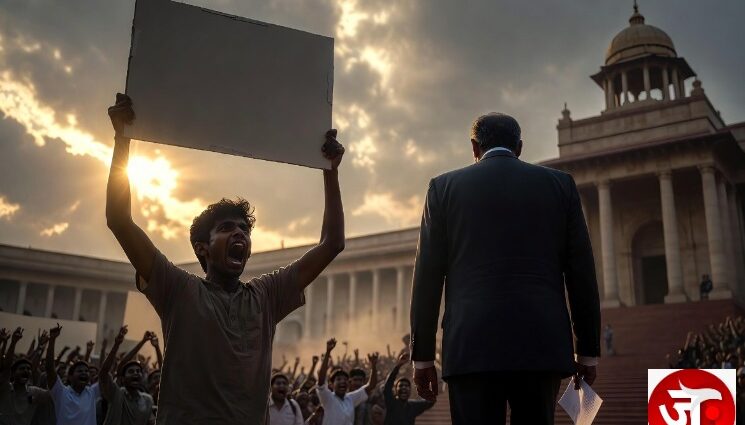
In a rare and resounding victory for India’s youth, Union Education Minister Dharmendra Pradhan resigned on July 25, 2026, after 36 days of relentless protests led by the Cockroach Janata Party (CJP) at Delhi’s Jantar Mantar. Triggered by the NEET-UG paper leak and deeper exam-system failures, the movement forced the Modi government into an unprecedented retreat. International media seized on the moment with sharp, unflinching coverage.
The BBC declared that “the government underestimated the students’ anger,” noting how the administration, long known for its hard line against dissent, was compelled to bow to the pressure of a youth-led uprising.
The Guardian framed it historically: “For the first time in 12 years of BJP rule, one of Prime Minister Modi’s closest and most trusted ministers has been forced to resign under public pressure.”
The New York Times reminded readers of Pradhan’s earlier dismissive rhetoric, writing that the minister who once branded protesters the “B-team of terrorists” had now stepped down, calling the agitation “one of the biggest challenges facing the Modi government.”
CNN described the resignation as”a rare and growing challenge” to a government unaccustomed to yielding, while Al Jazeera and Reuters highlighted the deeper undercurrents of Gen-Z frustration over education, unemployment, and accountability.
What began as a focused demand for one minister’s exit evolved into a national statement. Students, activists, and ordinary young Indians refused to be sidelined. When Pradhan finally submitted his resignation, citing the need to prevent “anti-national forces” from exploiting the unrest, the CJP called off the protest amid jubilant scenes.
This was more than a personnel change. It was proof that sustained, peaceful pressure from the streets can still bend even the most powerful political machines. For a generation long told to wait its turn, the message was clear: the future will not be postponed.
JANPATH NEWS NETWORK (JNN)
Independent. Fearless. On the People’s Path.