After travelling extensively across Gadchiroli, the only good school for Tribal children I came across was the one started by Dr. Prakash Amte: Abhijeet Dipke
September 19, 2026: After travelling through the remote tribal belt of Gadchiroli and visiting schools serving children in some of Maharashtra’s most difficult-to-reach areas, Abhijeet Dipke says he encountered a stark contrast between what tribal children are capable of achieving and the conditions in which many are expected to study.
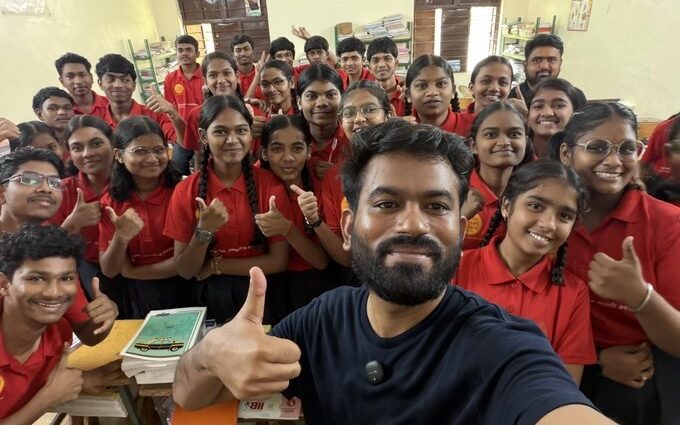
Dipke, founder of the Cockroach Janta Party, has launched the “Adivasi School Thik Karo” campaign to inspect tribal schools on the ground, document their infrastructure and safety problems and push authorities to address them. The campaign was announced after his earlier rural-school outreach and is focused on seeing what exists beyond government records and official claims.
His visits have brought reports of schools struggling with basic necessities. At one school in Etapalli, students were reported to be walking around two kilometres through a forest route amid fear of tigers simply to reach school. Another school in Dumme faced a drinking-water problem, with students travelling from distant areas and lacking adequate transport facilities.
Dipke’s observations have also highlighted serious concerns at some ashram schools, including inadequate toilets and bathrooms. He has questioned how children, particularly girls, can be expected to study with dignity and safety when even basic infrastructure is missing.
But in the middle of this bleak picture, Dipke found one school he openly praised. That was the institution established through Dr. Prakash Amte’s Lok Biradari Prakalp at Hemalkasa, which has spent decades working with tribal communities in Gadchiroli.
Instead of finding merely the minimum required facilities, Dipke encountered a school with a science laboratory, art studio, digital laboratory and library, along with what he described as exceptionally healthy meals for students.
The results are visible beyond the classrooms. This year, eight students from the Loksadhana Centre for Excellence in Higher Studies at Hemalkasa secured admission to MBBS programmes in medical colleges across Maharashtra. The centre, established in 2022, provides free NEET coaching, academic guidance and mentoring to students from remote and economically disadvantaged backgrounds. Four of this year’s eight MBBS entrants are from Scheduled Tribe communities, while all are first-generation learners from modest socio-economic backgrounds.
For Dipke, the achievement raises a fundamental question. If a school serving children in one of India’s most remote tribal regions can provide laboratories, digital learning, a library, nutritious food and a pathway to medical education, why can’t the government provide comparable facilities to tribal children when it has vastly greater financial resources?
The question lies at the heart of his campaign. Dipke’s visit also gave him an opportunity to meet Dr. Prakash Amte and his wife, Dr. Mandakini Amte, whose work with tribal communities has continued for nearly five decades.
For an activist who arrived in Gadchiroli looking for evidence of what is failing, the Hemalkasa school offered something different: evidence of what is possible.
Gadchiroli has shown Dipke two realities: schools where children struggle for basic dignity, and one remarkable institution demonstrating what tribal education can become when commitment meets resources.
His campaign now seeks to take that contrast beyond Gadchiroli and place the condition of tribal schools at the centre of the national conversation on education.
JANPATH NEWS NETWORK (JNN)
Independent. Fearless. On the People’s Path.