RIYADH/CAIRO – SEPTEMBER 26, 2026
The Middle East is facing a fresh escalation on two interconnected fronts as Yemen’s Houthis intensify attacks on Saudi Arabia while Iran and the United States remain locked in a high-stakes confrontation over the Strait of Hormuz and Tehran’s nuclear programme.
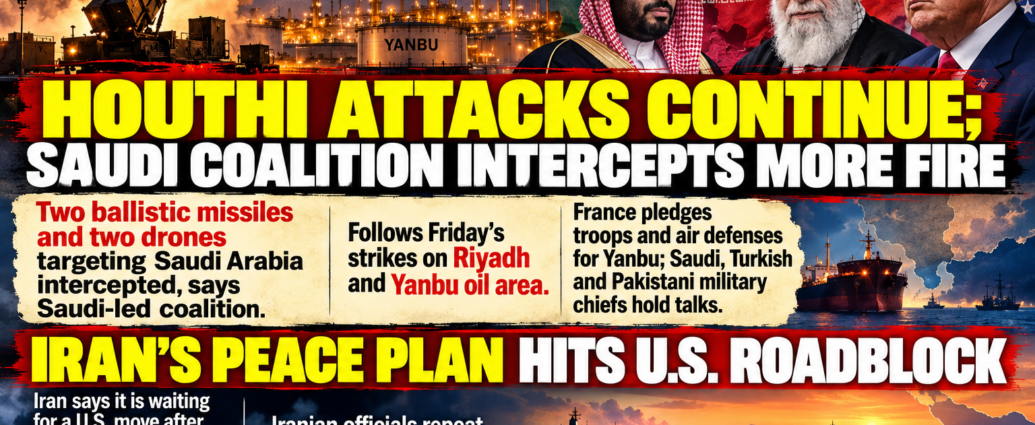
Saudi Arabia and its allies have been scrambling to protect critical energy infrastructure after a series of Houthi missile and drone attacks. The Saudi-led coalition said it had intercepted multiple ballistic missiles targeting areas including Taif and Yanbu, while Greek-operated Patriot air defences also intercepted a ballistic missile and a drone in the wider Yanbu region.
The escalation has placed Yanbu, Saudi Arabia’s major Red Sea oil-export and refining hub, at the centre of the crisis. France has pledged to deploy military personnel, radars and air-defence systems to help protect the strategic facility, while Saudi Arabia, Turkey and Pakistan are preparing high-level discussions under their joint defence arrangements.
The significance of Yanbu extends well beyond Saudi Arabia. The port provides the kingdom with a crucial alternative route for exporting oil when shipping through the Strait of Hormuz is disrupted. Any sustained attacks on its infrastructure could therefore add another layer of pressure to already fragile global energy markets.
The Houthi escalation is unfolding alongside an increasingly uncertain diplomatic confrontation between Washington and Tehran.
Iran has proposed reopening the Strait of Hormuz within seven days under a plan that would involve an end to hostilities, the lifting of the US naval blockade and sanctions-related measures, and the release of frozen Iranian funds. Iranian Foreign Minister Abbas Araghchi said the proposal had been conveyed to Washington through intermediaries.
But Tehran has simultaneously drawn a hard line on its nuclear programme. A senior Iranian official told Reuters that Iran would show no flexibility over its nuclear programme, even if Washington accepted the proposal to reopen Hormuz.
The diplomatic picture became still more uncertain after The Wall Street Journal reported that US President Donald Trump had rejected Iran’s seven-day ceasefire proposal. Reuters reported on Saturday that Tehran was awaiting an official US response following that report.
That leaves the region caught between diplomacy and escalation. The Houthis are putting Saudi territory and energy infrastructure under growing military pressure, while Iran is using the Strait of Hormuz as a central bargaining point with Washington. At the same time, the United States is demanding movement on Iran’s nuclear programme, while Tehran says that issue is not open for immediate concessions.
With Saudi Arabia seeking additional international air-defence support, France moving toward a direct protective role and Turkey and Pakistan preparing security consultations, the conflict is increasingly drawing in countries far beyond the original US-Iran confrontation.
The danger is no longer confined to battlefields. Missiles over Saudi Arabia, the security of Yanbu and the fate of the Strait of Hormuz are now converging into one regional crisis with potentially global consequences for energy supplies, shipping and diplomacy.
Janpath News Network